Why a solar eclipse is the best time to study the ‘invisible’ part of the Sun
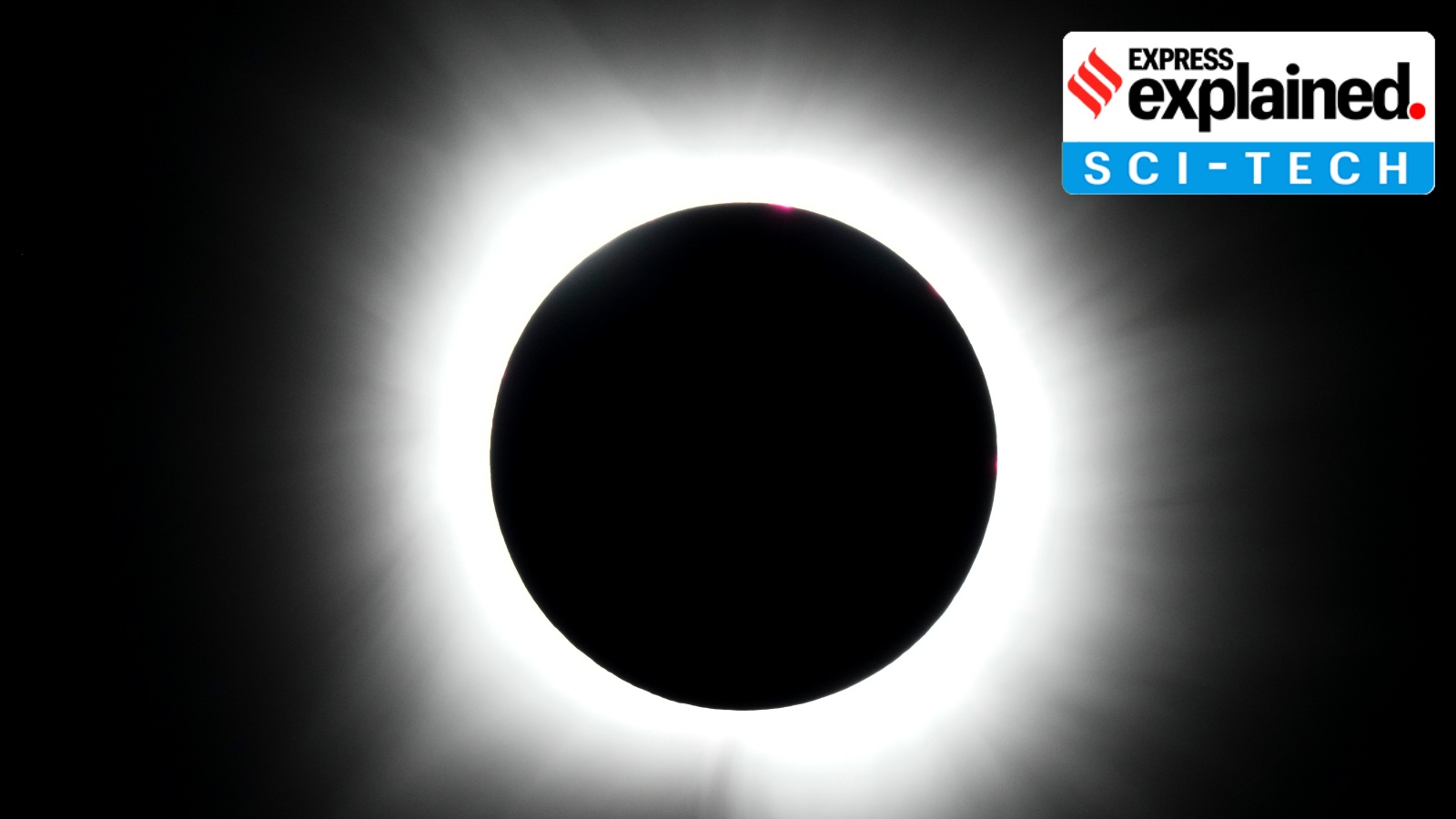
A total solar eclipse, occurring on August 12, presents a unique opportunity for scientists to study the Sun's "invisible" corona. This phenomenon happens when the Moon passes between the Sun and Earth, casting a shadow on our planet. While only certain parts of Europe, such as the north of Russia, Greenland, Iceland, Spain, and Portugal, will witness the total eclipse, larger areas will experience a partial solar eclipse.
The path of totality, where the Moon completely blocks the Sun, is particularly significant for solar research. During a total solar eclipse, the Moon's shadow allows scientists to observe the Sun's corona, a faint outer atmosphere that is otherwise concealed by the Sun's bright light. This is achieved by using a coronagraph, an instrument that blocks the solar disc and reveals the inner corona as a halo around the Moon.
The current solar cycle, which began in 2020, is nearing its maximum phase, making this eclipse especially valuable for studying the Sun's magnetic structures. Indian researchers at Centre of Excellence for Space Science India (CESSI), IISER-Kolkata, predict the possibility of spotting large-scale streamers, which are bright magnetic field structures rooted to the solar surface.
Observing these structures during the eclipse offers valuable insights into the underlying magnetic field of the Sun.
Written by urgent.news from The Indian Express's reporting — not their text. Machine-written — may contain errors; check the original before relying on it.