What is Unitree and why are China’s humanoid robot makers racing to list?
Unitree said its retail tranche was more than 8,000 times oversubscribed, underscoring intense investor enthusiasm in China for humanoid robotics.
Unitree, a Chinese robotics company founded in 2016 by engineer Wang Xingxing, is gearing up for a Shanghai initial public offering (IPO) priced at 150.8 yuan per share. The company aims to raise 6.1 billion yuan ($904 million) through the deal, potentially becoming the first mainland-listed humanoid robot manufacturer.
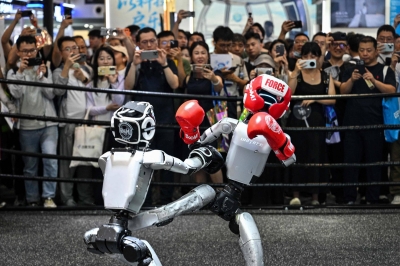
Unitree gained recognition for its affordable quadruped robots, or "robot dogs," namely the G1, H1, and R1 models. These robots showcased remarkable agility, as seen in viral demonstrations featuring them running, dancing, and even performing martial arts. Unitree's offerings compete with industry giants like Tesla and Boston Dynamics, alongside an expanding network of Chinese startups striving to create machines capable of working in factories and homes.
Since its inception, Unitree's revenue has surged more than fourfold, reaching nearly 1.7 billion yuan in 2025. The company reports profitability, with an adjusted net profit of approximately 600 million yuan. Moreover, over 40% of Unitree's sales come from overseas operations.
Unitree's success underscores China's capacity to produce sophisticated robots at a fraction of the cost of overseas competitors, thanks to the nation's extensive supply chains for motors, sensors, batteries, and other essential components. The company also represents Beijing's commitment to leading the development of embodied intelligence, an emerging field that merges AI models with machines capable of navigating and interacting with the physical world.
However, despite Unitree's commercial triumph, the company's robots primarily cater to universities and government-backed projects focused on education, research, and demonstrations. The demand for humanoid robots remains limited, as they continue to grapple with reliability, dexterity, and the ability to perform varied tasks continuously without human intervention.
The push for public listings by robot makers like Unitree stems from the substantial investment required to develop humanoid technology. The process demands significant resources allocated to engineers, robot-training data, AI models, and manufacturing capacity, all of which must be sustained for an extended period before market demand becomes evident.
Consequently, public markets provide companies with the necessary capital to persist in their technological advancements while maintaining strong government support and investor interest. Other prominent humanoid producers, such as Leju Robotics and AgiBot, have also initiated applications for listings on Shenzhen's ChiNext market and Hong Kong's stock exchange, respectively.
Written by urgent.news from Economic Times Tech's reporting — not their text. Machine-written — may contain errors; check the original before relying on it.
This story
This is one outlet's version. Read the fullest account.
- What is Unitree and why are China's humanoid robot makers racing to list? koreatimes.co.kr
- What is Unitree and why are China's humanoid robot makers racing to list? economictimes.indiatimes.com
- Explainer-What is Unitree and why are China’s humanoid robot makers racing to list? investing.com