Three insights you may have missed from theCUBE’s coverage of the Neo4j GraphTalk event
Graph intelligence is fast becoming the enterprise’s missing connective tissue — the knowledge layer that lets models move from clever prototypes to reliable, decision‑grade systems. By preserving relationships across fragmented data, it gives artificial intelligence the context needed to produce more accurate answers and support informed action. At the Neo4j GraphTalk event, the conversation…
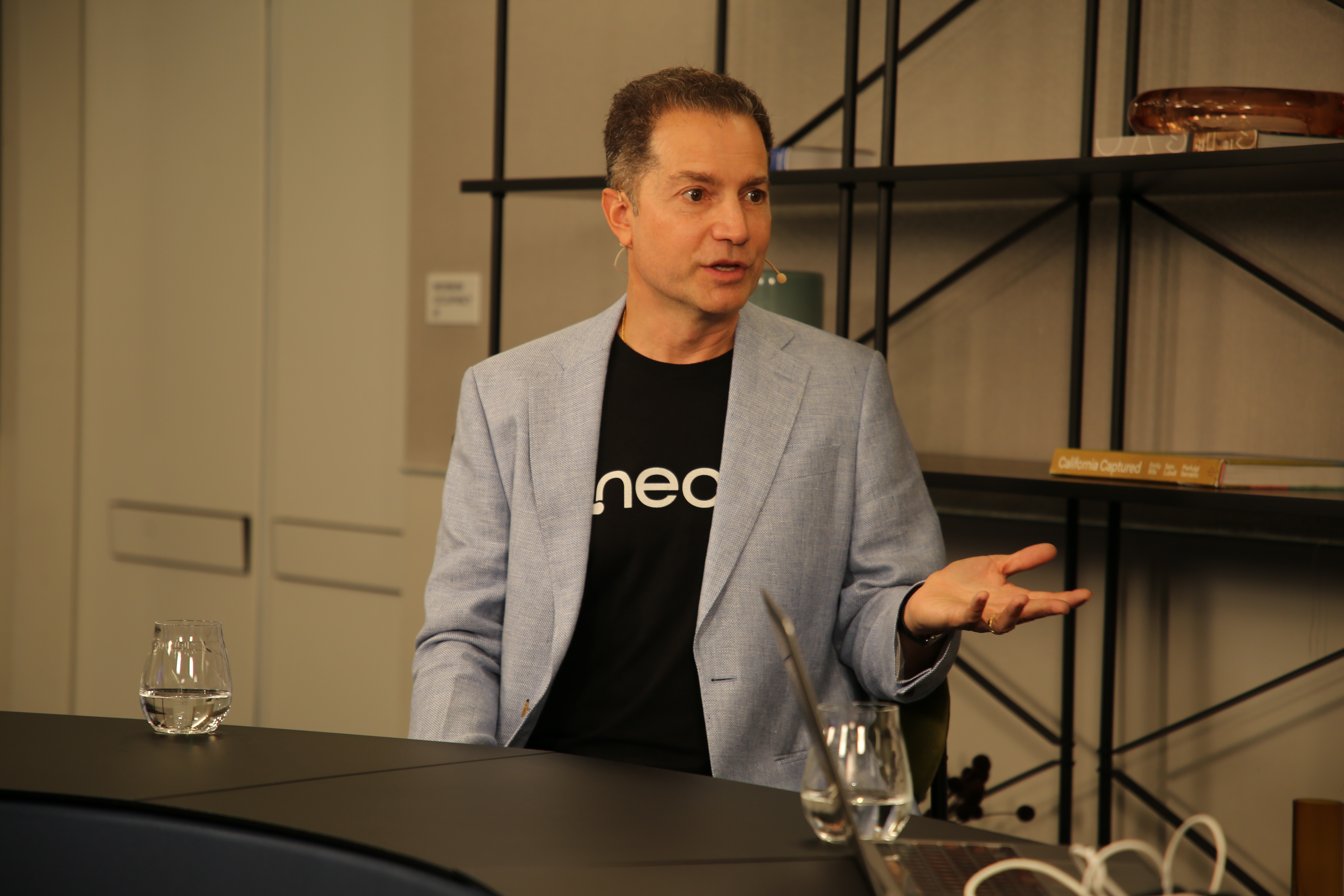
The Neo4j GraphTalk event showcased how enterprises are adopting a knowledge layer to bolster generative AI systems. This layer preserves relationships across fragmented data, enabling AI models to produce more accurate answers and support informed action without relying on the models themselves. At the event, John Furrier, host of theCUBE, emphasized that graph intelligence is becoming the connective tissue that bridges fragmented data and powers AI at scale.
One key insight is that enterprises are converging on an architecture where large language models are grounded in trustworthy organizational data using a knowledge layer. This approach keeps the organization's ontology, data, and agent memory outside the model, allowing for better accuracy, explainability, and governance. Independent research supports this claim, with the U.K.'s National Innovation Centre for Data finding that GraphRAG made agents 80% more truthful than vector-only retrieval, while enabling them to answer more than twice as many questions and use tokens more efficiently.
A recent engagement with a national tax agency demonstrated the value of graph models by exposing hidden tax fraud connections within forty-eight hours of starting a proof of concept.
Another insight from the event highlights how graph intelligence can uncover relationships that conventional tools and human analysts often miss. For instance, in Gilead Sciences Inc.'s pharmaceutical anti-counterfeiting work, a three-layer detection model combines rules-based logic, traditional machine learning, and graph neural networks.
This combination allows for the detection of hidden networks and relationships that human analysts might overlook. A graph neural network approach has enabled Gilead to analyze data at a scale previously unattainable due to human limitations, ultimately helping to detect fraud that spans multiple entities.
Lastly, the event showcased how connected context can empower AI agents for more autonomous security investigations. Icite Inc., for example, normalizes customer identity data into a graph-based knowledge layer that enables agents to traverse relationships, establish behavioral baselines, and identify deviations. This allows for autonomous work handling routine tasks, freeing human analysts to focus on critical decision-making.
By leveraging graph intelligence, enterprises can create a shared intelligence layer that provides a reusable foundation for agent development across large enterprise environments. This approach enables teams to build multiple agents in a short timeframe, preserving relationships and metadata in one centralized system rather than rebuilding context for each individual agent.
Written by urgent.news from SiliconANGLE's reporting — not their text. Machine-written — may contain errors; check the original before relying on it.