The Best Photos of the Big August Solar Eclipse
It’s been a century since the Iberian Peninsula has been in the full shadow of the moon. Here’s what it looked like in the path of totality.
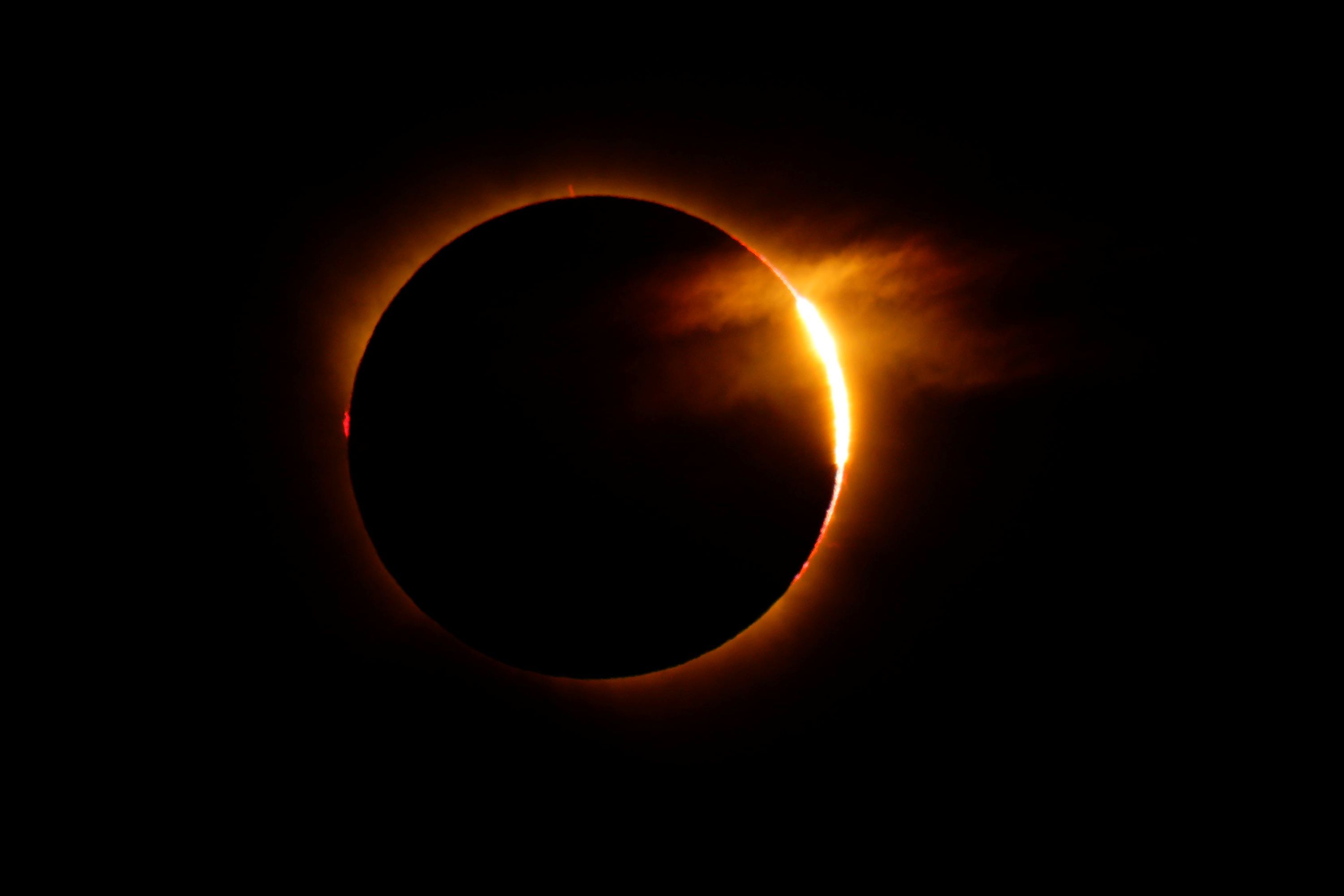
The 2023 solar eclipse, known for its path of totality, made its way across the northern hemisphere, starting in the Arctic Ocean north of Greenland. It then meandered west of Iceland and crossed the North Atlantic. The event touched down on the Iberian Peninsula at precisely 8:30 pm central European summer time. Countries like Galicia, Asturias, Castile and León, Madrid, Aragon, Catalonia, the Valencian Community, and the Balearic Islands were fortunate enough to witness the total eclipse. The rest of Spain experienced a partial eclipse.
This extraordinary celestial phenomenon lasted approximately four and a half hours, with the sky darkening for just under two minutes, providing scientists with a rare window to study the solar corona. The corona, the sun's outermost atmosphere, is typically too dim to observe under normal circumstances. However, during the total eclipse, it became visible, allowing researchers to gather crucial data.
One notable project involved a NASA mission aboard a WB-57 high-altitude research aircraft flying at 50,000 feet. The aircraft's mission was to track the moon's shadow as it traveled across the path of totality.
In addition to the scientific endeavors, the eclipse also served as an educational opportunity. Students from various US universities were invited to participate in Iceland and Spain. Their tasks included launching scientific balloons before, during, and after the event. The primary objective was to analyze how the temporary darkness induced by the eclipse impacted conditions in Earth's atmosphere. This data would contribute to a deeper understanding of the effects these astronomical events have on our environment.
As we marvel at the images captured during Wednesday's solar eclipse, another celestial event awaits later this month. A partial lunar eclipse will be visible across the Americas. This presents another opportunity for scientists to delve into the mysteries of the cosmos.
Written by urgent.news from Wired's reporting — not their text. Machine-written — may contain errors; check the original before relying on it.