Singapore must not fear unusual, innovative approaches to future challenges, says Jayakumar at book launch
Professor S Jayakumar said his new book seeks to lift the veil of secrecy on deliberations in founding Prime Minister Lee Kuan Yew's Cabinet and show that Mr Lee listened to contrary views.
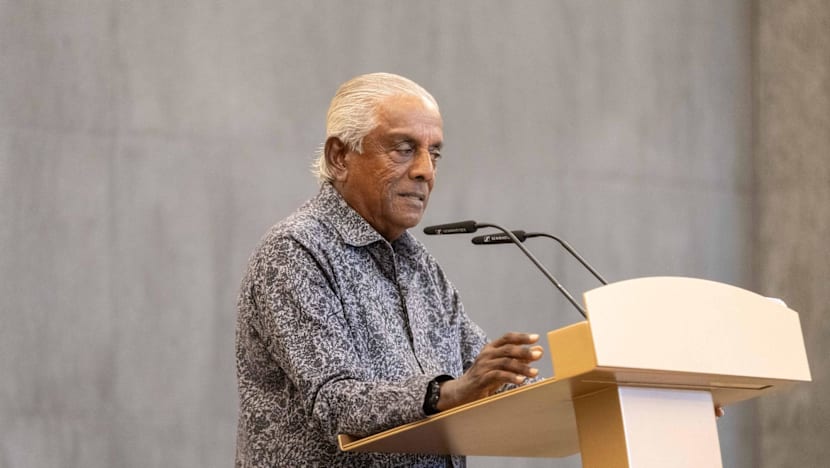
Veteran statesman Professor S Jayakumar emphasized at the launch of his latest book, "Creating Three Unique Singapore Laws: An Inside Story," that Singapore must not shy away from unconventional and innovative strategies to tackle future challenges. The book delves into the creation of three distinctive laws—electing a president, introducing Group Representation Constituencies (GRCs), and permitting Non-Constituency Members of Parliament (NCMPs)—which Professor Jayakumar, an 87-year-old former minister in the Cabinets of three prime ministers from 1981 to 2011, believes were the most intriguing and demanding legislation he encountered during his three decades in government.
The book aims to dispel the notion that Singapore's founding Prime Minister Lee Kuan Yew discouraged dissent. In reality, Lee was open to hearing opposing viewpoints, even from younger ministers, as long as the primary focus remained on formulating a workable solution. Jayakumar highlighted that Lee's forward-thinking approach went beyond his own tenure, extending to subsequent governments led by Goh Chok Tong and Lee Hsien Loong.
Jayakumar stressed that while Singapore has adopted best practices from other countries, it must remain "very clear-eyed" that not all approaches will fit its unique circumstances. He explained that the book sheds light on the deliberations behind the NCMP scheme in 1984, the implementation of GRCs in 1988, and the elected presidency in 1991.
The PAP government has traditionally maintained secrecy regarding internal Cabinet discussions to uphold the principle of collective responsibility and deter leaks from disgruntled officials. However, the book partially lifts this veil, providing insight into the dynamics among key personalities and the process of compromise and consensus.
Professor Jayakumar also addressed the misconception that Lee Kuan Yew had no tolerance for dissent, revealing that Lee actively encouraged alternative perspectives. He cited examples, such as Lee's correspondence in the 1970s expressing concerns about ensuring Malay parliamentarians' effectiveness in predominantly Chinese constituencies. Even after serving in the governments of Goh Chok Tong and Lee Hsien Loong, the same principle of fostering open dialogue among ministers persisted.
Written by urgent.news from Channel News Asia's reporting — not their text. Machine-written — may contain errors; check the original before relying on it.