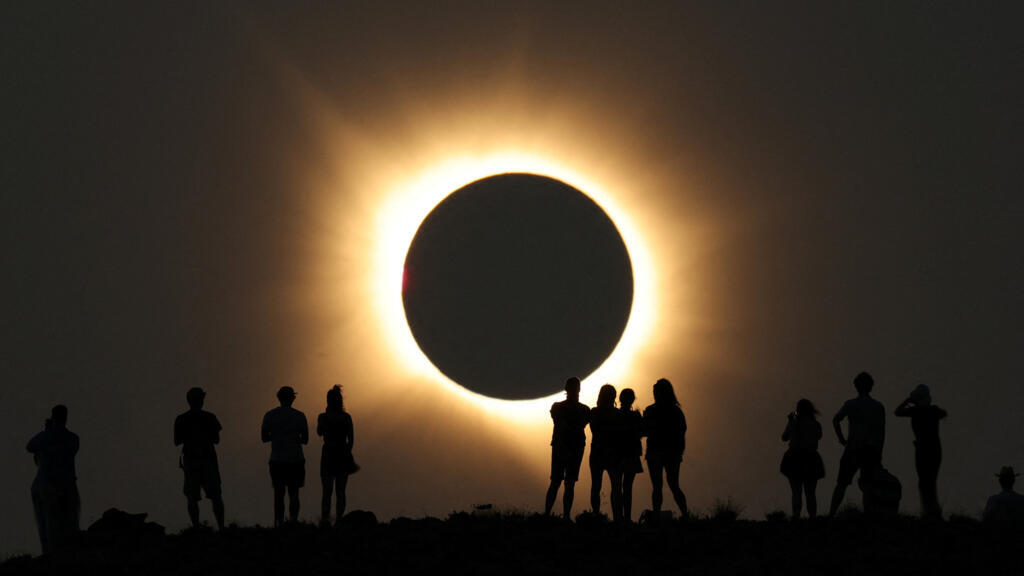
‘Once in a lifetime’: Millions gather in Europe to see first total solar eclipse in decades
People crowded cloudless cities and towns to witness the alignment of the sun, moon and Earth briefly plunge parts of the planet into darkness.
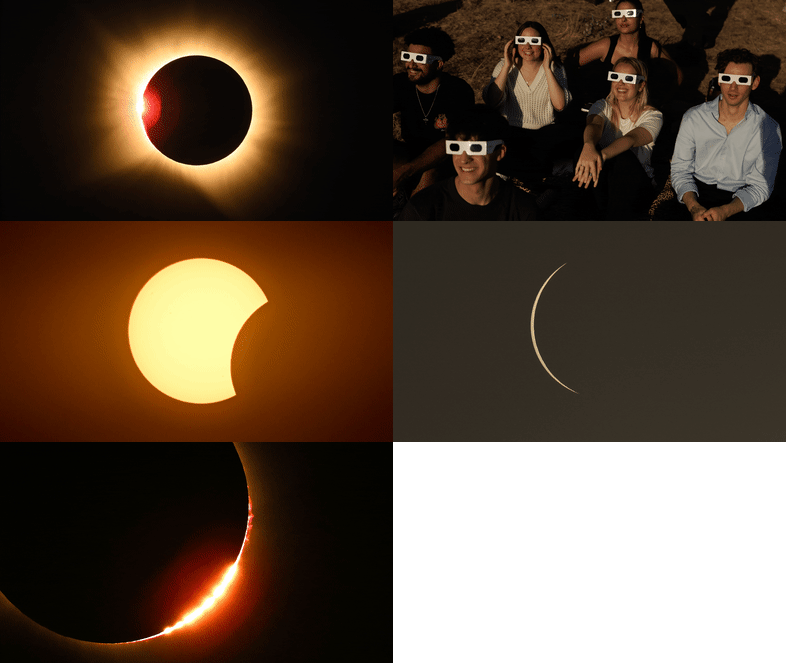
A solar eclipse commenced across the United Kingdom and various parts of Europe, with the Moon progressively obscuring the Sun's surface. The phenomenon began in Edinburgh around 18:28 BST, with the event predicted to reach its zenith at approximately 19:06 in the Scottish city. According to BBC, Edinburgh residents could witness the Moon "starting to take a bite out of the sun," while sunspots were also observable through a telescope.
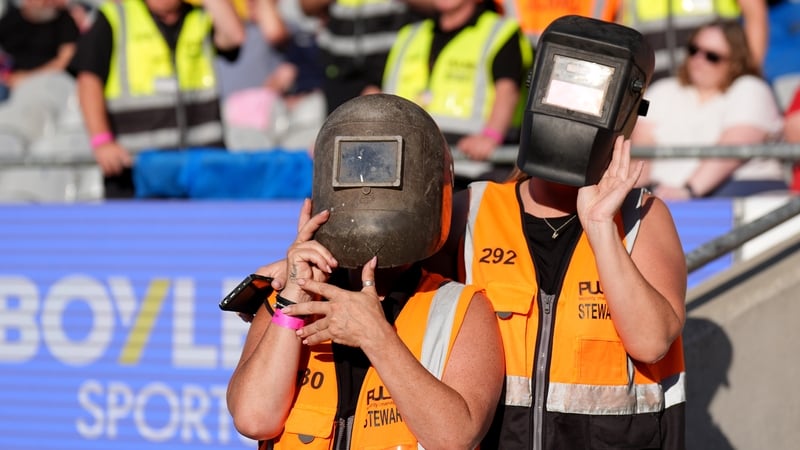
The eclipse was already in full swing in Iceland and Greenland, while other European nations were anticipated to experience a total eclipse. More than 90 percent of the Sun would be covered by the Moon in most sections of the UK, making it the most substantial solar eclipse visible from the country since 1999. Crowds amassed at viewing spots throughout the UK, with special eclipse glasses reportedly selling out in certain areas.
In Russia, the Moon first blocked the Sun near the country's northernmost mainland point at around 1700 GMT, leaving only the ethereal glow of its outer corona and an eerie darkness. The celestial event prompted a rush to obtain protective glasses across Europe. As the eclipse traversed Greenland and Iceland, anticipation grew in Spain, where the Moon's celestial path forms a diagonal line from the northwestern Atlantic coast to the Mediterranean Sea before concluding around 1830 GMT.
Tourists and enthusiasts flocked to typically tranquil Spanish villages, as mainland Europe has not experienced a total solar eclipse in 20 years, and Spain has not witnessed one in over a century.
Written by urgent.news from Punch Nigeria's reporting — not their text. Machine-written — may contain errors; check the original before relying on it.
This story
This is one outlet's version. Read the fullest account.
- Excitement sweeps Europe as millions view total solar eclipse timesofisrael.com
- PHOTOS: Millions gather to watch Europe's first total solar eclipse in decades pbs.org
- PHOTOS: Solar eclipse begins across UK, Europe punchng.com
- Europe's first solar eclipse in 27 years in pictures abc.net.au
- Solar Eclipse Visible From Europe For First Time In 27 Years: Photos forbes.com
- Europe sees first total solar eclipse in 27 years | Special Report cbsnews.com
- Spectacular solar eclipse over Europe theage.com.au
- Spectacular solar eclipse over Europe smh.com.au