Myanmar ramps up civilian attacks with airborne weapons, U.N. says
The military increasingly relies on motorized paragliders, gyrocopters and drones for low-altitude strikes using unguided explosives, according to U.N. investigators.
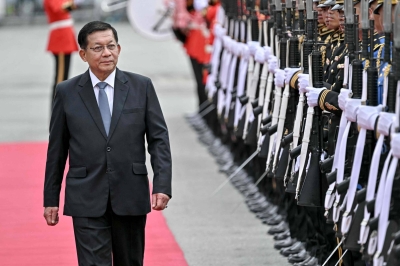
Myanmar's military is employing an increasing number of drones, motorized paragliders, and other small aircraft to target civilians, according to a recent report by the United Nations. Despite the country's leaders attempting to portray stability and legitimacy following a military-led election, the report reveals a troubling trend of rising attacks since July of the previous year, with a significant surge in the months leading up to the December and January elections.
The elections, which bolstered then-junta leader Min Aung Hlaing's path to the presidency in April of 2021, were marked by heightened military reliance on low-altitude strikes using unguided explosives, such as mortar shells. In several instances in Sagaing region, paraglider pilots deliberately cut their engines as they approached targets, gliding silently and cutting off crucial warning time for civilians to seek refuge.
The UN investigators also documented a disturbing pattern of so-called "double-tap" aerial attacks, where the military targets a location and then follows up shortly thereafter, often striking first responders, those aiding the injured, and individuals attempting to flee. The frequency and intensity of war crimes and crimes against humanity committed by Myanmar's military and various armed groups have continued to escalate over the past year, as indicated by the extensive evidence collected by the UN mechanism.
Additionally, the report highlights a host of other human rights abuses, including arbitrary detention, torture, and sexual violence, all occurring within military-run facilities. The findings challenge the military-backed government's attempts to portray the election as a return to civilian rule, as the military-backed party dominated the vote, excluding major opposition parties and detaining former civilian leader Aung San Suu Kyi.
Western governments have largely dismissed the election as neither free nor fair. Min Aung Hlaing has since intensified his diplomatic efforts, visiting countries such as China, India, Laos, and Thailand, although he has dismissed the Association of Southeast Asian Nations' stalled peace plan and accused some members of engaging in "unconstructive discrimination."
Written by urgent.news from Japan Times's reporting — not their text. Machine-written — may contain errors; check the original before relying on it.