Meet the potter wasp, the insect that builds its own mudhouse
Distinguished by their pot-shaped mud nests, Potter wasps are solitary insects that exhibit incredible craftsmanship. Using a combination of mud and saliva, they build their homes with care. Following egg-laying, the females venture out to capture caterpillars, which serve as nutritious meals for their growing larvae. Their activities help maintain ecological balance and contribute to effective…
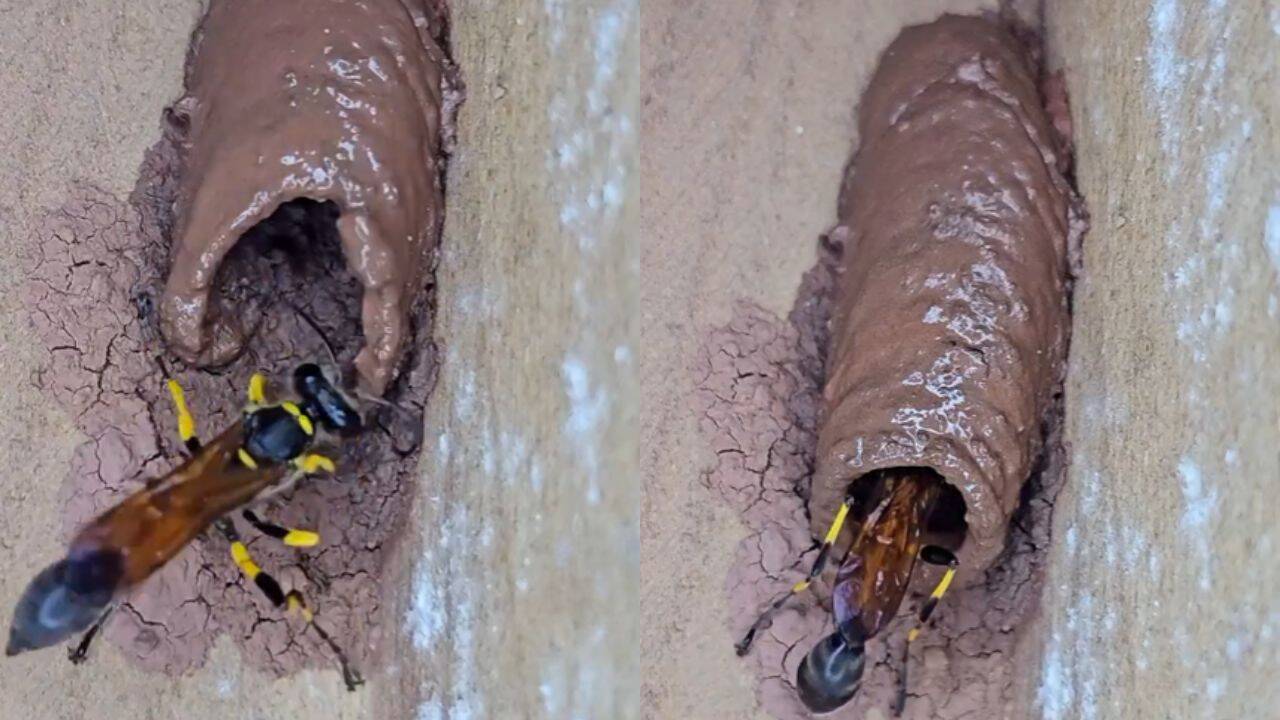
The potter wasp, a part of the subfamily Eumeninae in the Vespidae family, is celebrated for constructing unique mud nests that resemble clay pots. These solitary insects, measuring around one inch in length, boast a black body with yellow stripes. Unlike their social counterparts, potter wasps lead individual lives, coming together only for mating during the summer.
Female potter wasps create their nests by mixing mud with saliva and attaching them to various surfaces like plant stalks or human structures. After laying 12 to 20 eggs inside each nest, she hunts for caterpillars to feed her larvae. Potter wasps face threats from parasitic insects, including tachnia flies, cuckoo wasps, and ichneumon wasps.
With about 3,800 species across 200 genera, these insects are integral to biodiversity. Potter wasps are found in warm, humid climates across diverse habitats such as forests, grasslands, and urban areas. Unlike female potter wasps, who typically die after mating or completing their reproductive duties, males have an even shorter lifespan, dying soon after mating.
Potter wasps hunt for caterpillars and beetle larvae, paralyzing them with venom before bringing them back to their nest to feed their developing offspring. The wasps exhibit remarkable nesting diversity, constructing nests as excavators, renters, or builders. Completed nests often have a flared entrance, which aids in their distinctive appearance.
Potter wasps play a crucial role in controlling agricultural pest populations and provide shelter for solitary bees, beetles, and spiders through their abandoned nests.
Written by urgent.news from Times of India's reporting — not their text. Machine-written — may contain errors; check the original before relying on it.