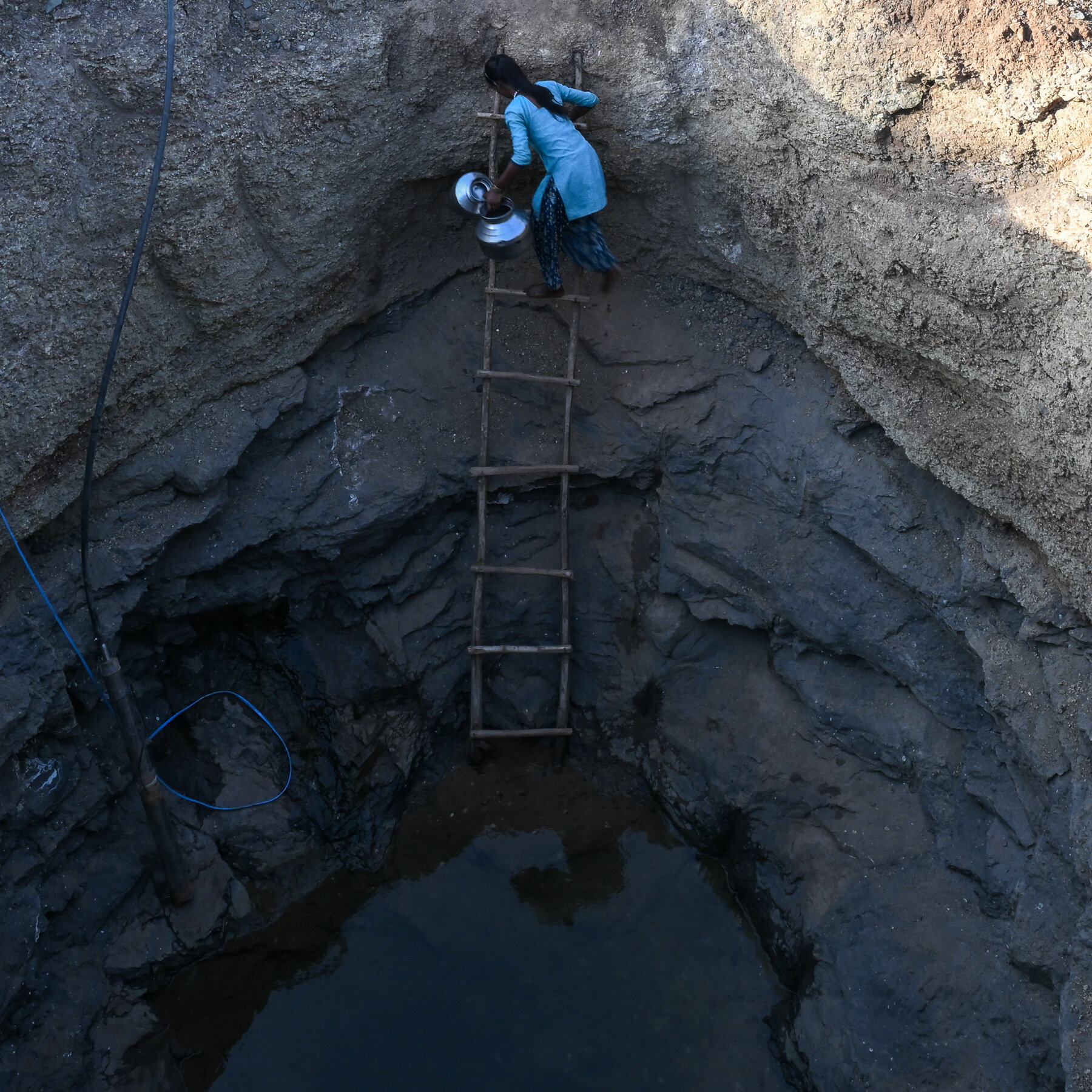
Japan’s Underground Lab Wants to Solve the World’s Nuclear Waste Problem
A rare visit to the Horonobe Underground Research Laboratory, where Japanese researchers are testing options for storing radioactive waste.
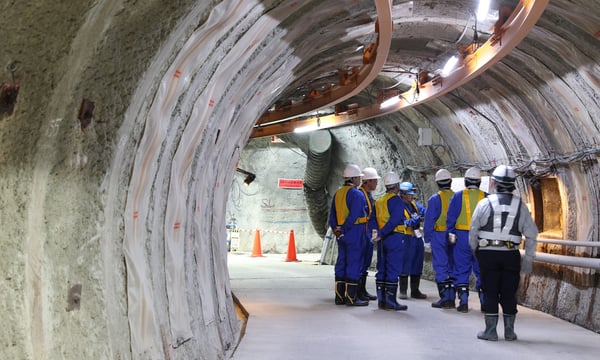
In the flat, windswept plain of Japan's northernmost prefecture, a laboratory sits 300 meters below ground. Inside the Horonobe Underground Research Laboratory, engineers are attempting to solve a global problem: how to securely isolate highly radioactive waste for tens of thousands of years.
One of only two underground research labs in Japan, Horonobe operates in sedimentary rock, providing officials with a unique environment to study. The facility's origins trace back to an agreement signed in 2000 between the governor of Hokkaido, the mayor of Horonobe town, and the Japan Atomic Energy Agency (JAEA). Construction followed over the next two decades, resulting in a complex of shafts and galleries used to test the interactions between engineered barriers, groundwater, and surrounding rock.
Two central experiments at Horonobe involve the performance of engineered barriers and the transport of solutes under real conditions. Researchers are also studying how the surrounding sedimentary rock can buffer natural disturbances such as earthquakes and groundwater shifts. Importantly, Horonobe is not a candidate site for Japan's high-level waste repository; it is solely a research facility, in line with Japanese law.
The JAEA has also made international efforts, launching the Horonobe International Project in February 2023, partnering with organizations from countries like Australia, Bulgaria, Germany, South Korea, Romania, Taiwan, and the United Kingdom. The project aims to test design assumptions in real-world conditions and benchmark disposal-performance models for countries like South Korea.
While Japan has faced challenges in finding a permanent repository site, Horonobe's international role offers valuable insights and technology development for other countries in the early stages of building their own waste management systems.
Written by urgent.news from The Diplomat's reporting — not their text. Machine-written — may contain errors; check the original before relying on it.