Inequality worsens as wealth gap widens
The economic disparity is most apparent in the eastern part of Indonesia, such as Sulawesi and Papua, where extractive industries, which are done by businesses led by wealthy people and driven by Jakarta-centered development, have exacerbated the wealth rift.
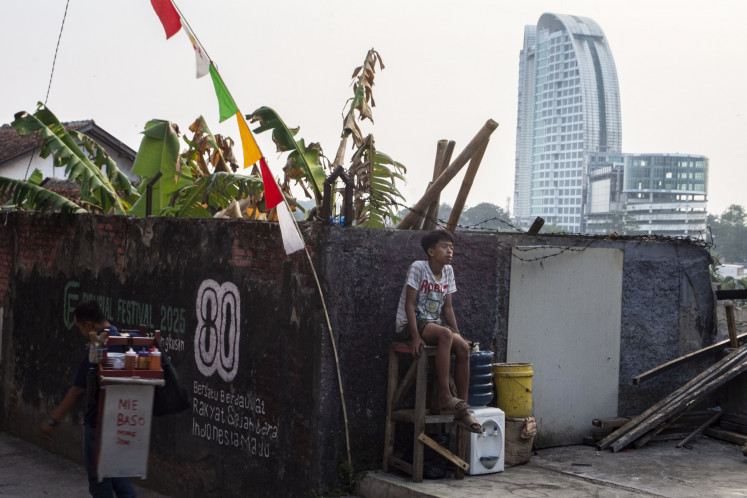
The widening wealth gap in Indonesia is particularly evident in eastern regions like Sulawesi and Papua, where extractive industries driven by wealthy individuals and centered in Jakarta have exacerbated economic inequality. Over the past three decades, inequality in Indonesia has intensified, a trend observed in many resource-dependent countries within the Global South. To address this issue, academics advocate for inclusive economic growth rather than relying on excessive state intervention.
The 2026 Institute for Advanced Research (IFAR) Consortium Conference, hosted by the Indonesian International Islamic University in Depok, West Java, brought together over 220 scholars from at least 20 countries. The focus was on examining the current state of inequality across Southeast Asia, with a specific emphasis on Indonesia, where wealth is increasingly concentrated among a small group of politically-connected individuals.
Sociology professor Vivek Chibber of New York University highlighted that policy shifts favoring the wealthy at the expense of the general population, particularly the working class and labor force, have been the norm in countries like Indonesia since the 1980s. This trend is reflected in the country's Gini coefficient, which measures income inequality.
The latest score, reported by Statistics Indonesia (BPS) on August 5, was 0.368, slightly up from 0.363 in September of the previous year. The Gini coefficient ranges from zero (perfect equality) to one (complete inequality).
Written by urgent.news from The Jakarta Post's reporting — not their text. Machine-written — may contain errors; check the original before relying on it.