'Handcrafted' hardware scales up as China's supply chain backs DIY innovators
AI and 3D printing are transforming China’s DIY tech scene, allowing small teams to develop robots, drones and smart devices in days.
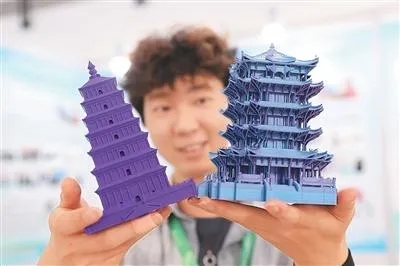
Handcrafted hardware, a term once associated with small, playful gadgets, is now expanding into industrial-grade production in China. The DIY spirit, fueled by advancements in AI and 3D printing, is enabling small teams to quickly build complex equipment like robots and drones. Tan Liwei, a user experience engineer at Huawei, developed a smart plant accessory in 2025 that translates soil-monitoring data into facial expressions for plants.
The product gained widespread attention after being showcased at the 2026 CES, prompting preorders in September.
Zhang Dong, a Ph.D. holder from Zhejiang University, is working on an eldercare robot capable of fetching water and fruit for seniors. Zhang's workshop has evolved from a garage to a space provided by a local subdistrict government. Advanced technologies have significantly accelerated the production process. What once took machine-vision sorters over three years to build can now be created in just three days with AI and 3D printing. Zhang's robot, which once cost 400,000 yuan, was sold to a company for a fraction of that price.
Small teams are increasingly building complex products in a matter of days. College students from Huazhong University of Science and Technology pooled resources to build a humanoid robot, later selling it for 400,000 yuan. High school students in Shenzhen constructed a drone from foam board and water bottles. Liu Lianlian, a researcher at the Anhui Academy of Social Sciences, notes that handcrafted hardware now incorporates technologies such as 3D printing, AI, programmable logic controllers, and modular components, making products functional, interactive, and commercially viable for various applications.
The bottleneck of mass production is no longer a significant obstacle, as long as a handcrafted hardware product garners market recognition. With China's comprehensive supply chain advantages, entrepreneurs can now swiftly transform prototypes into mass-produced products. Tan Liwei's path involved outsourcing various aspects of production to a large original design manufacturer in Shenzhen, allowing his team to focus on core development.
Agile manufacturing clusters, like Shenzhen's Huaqiangbei, offer design, rapid prototyping, flexible manufacturing, and logistics under one roof, facilitating single-item orders.
Supporting this ecosystem, platforms like Shenzhen InnoX Academy have become crucial resources for tech companies, providing a pool of over 1,600 suppliers covering all aspects of smart hardware manufacturing. JLC, a leading provider, uses a group-buying model to consolidate small orders into single production runs, drastically reducing costs and delivery times. With the backing of China's supply chain advantages, handcrafted hardware is poised for rapid commercialization.
Written by urgent.news from IOL's reporting — not their text. Machine-written — may contain errors; check the original before relying on it.