From solar to AI: why China may be entering its ‘Go Global 3.0’ era
Chinese corporate expansion overseas is shifting from solar equipment to artificial intelligence-enabled industrial technology, with a new generation of companies targeting global markets from inception, according to analysts at Goldman Sachs. “China has entered the ‘Go Global 3.0’ era,” wrote the investment bank’s team, led by Jacqueline Du, in a research note published on Tuesday. The evolution…
Chinese corporations are shifting their focus from solar equipment to AI-enabled industrial technology, signaling the emergence of a new era for global expansion, according to Goldman Sachs analysts. In a research note, the team led by Jacqueline Du declared that China has entered the "Go Global 3.0" era, surpassing the previous export eras driven by low-cost manufacturing and electric vehicles, lithium-ion batteries, and solar photovoltaic technology.
Domestic firms are now targeting AI technologies across the value chain, from data center infrastructure to automated industrial systems.
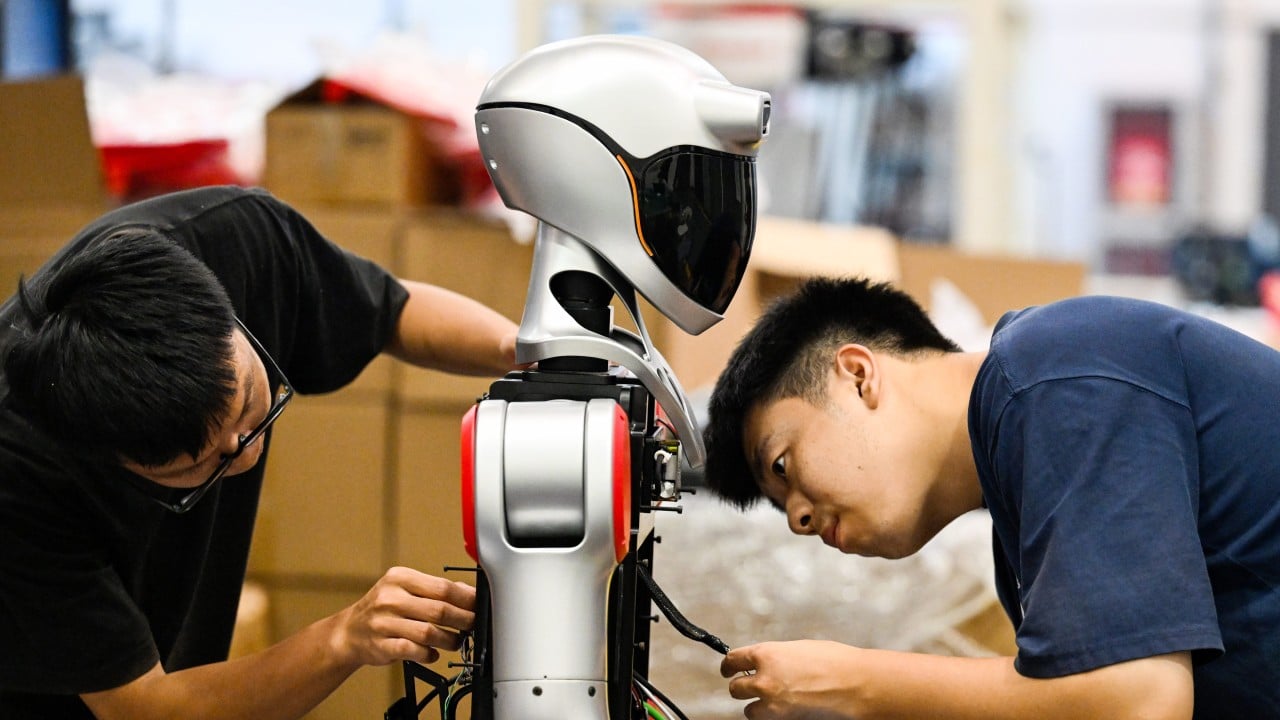
The overseas demand surge is driven by global supply shortages outside of China, as well as products benefiting from new technology adoption cycles. Among these firms are a growing number of "born global" tech companies, such as Unitree Robotics, which targets the global market from inception. Unlike traditional manufacturers that dominate the domestic market before venturing abroad, these firms treat the global market as their primary market from day one.
Unitree Robotics, for example, shipped over 5,500 humanoid robots last year, outpacing major US rivals like Tesla, Figure AI, and Agility Robotics, which collectively delivered about 150 units.
The trajectory of overseas market share and profitability for these firms will increasingly depend on evolving policies and customer willingness to adopt Chinese technologies in strategically sensitive sectors. However, Goldman Sachs analysts caution that these firms also face heightened regulatory, trade, and political risks. In a recent move, the United States banned imports of new humanoid and quadruped robots from foreign manufacturers, citing unacceptable security risks.
The FCC also imposed bans on imports of foreign-produced power inverters, crucial components for solar panels, car batteries, and data centers.
Domestic companies that deliver critical infrastructure amid global supply bottlenecks, such as electrical transformers and switchgear, are best positioned to capture midterm market share. However, the analysts argue that long-term competitiveness will hinge on whether Chinese exporters can maintain their deployment speed, competitive pricing, and product quality, along with ecosystem access and global services capabilities.
Written by urgent.news from South China Morning Post's reporting — not their text. Machine-written — may contain errors; check the original before relying on it.