Decades after religions shaped China’s Tianmushan, authorities tackle protecting reserve
HANGZHOU, China — On a misty morning in Zhejiang province, the peaks of Tianmu Mountain rise like sentinels above the forest canopy, their slopes wrapped in shifting veils of cloud. For centuries, monks and many villagers revered every tree and stream as sacred, a belief that researchers say has guided protection long before the word […]
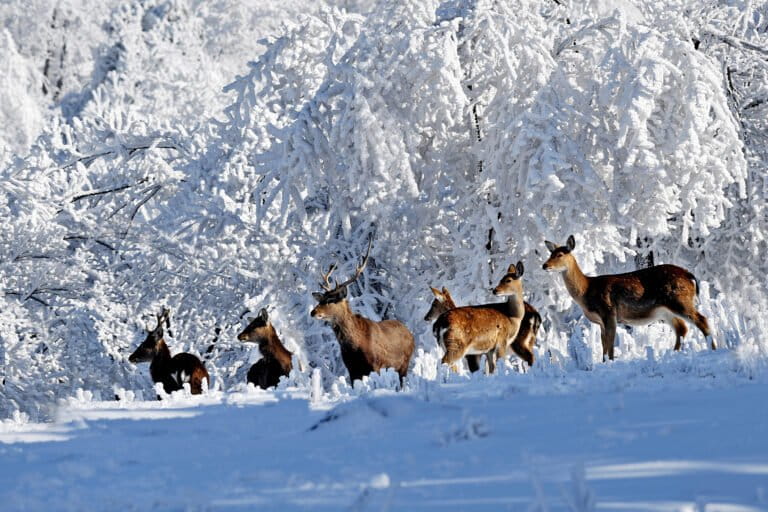
Hangzhou, China — On a misty morning in Zhejiang province, the peaks of Tianmu Mountain stand tall, enveloped in swirling clouds. For generations, locals and monks alike have held this natural wonder in reverence, considering every tree and stream to be imbued with spirit. This deep-rooted respect for nature, deeply intertwined with Buddhist, Daoist, and Confucian beliefs, has been the driving force behind centuries of conservation efforts, long before the term "environmental protection" became widely used.
Lu Senhong, head of the publicity and education division at the Tianmu National Nature Reserve Administration Bureau, explains to Mongabay, "The mountain's preservation is not solely due to its natural beauty. It is also because people here believe that each tree, flower, and bird possesses a spirit. This belief has ensured the mountain thrives."
Spanning over a millennium, a unique blend of religious traditions played a crucial role in safeguarding the diverse flora and fauna within this verdant reserve. The presence of temples on the land once mandated severe repercussions for those who violated the forest's sanctity, including monetary fines or expulsion from the monastery.
Monks were also held to strict codes of behavior, reflecting the profound importance placed on maintaining the forest's purity. However, the responsibility for protecting this rich ecosystem now falls to state regulations and a collaborative management plan, developed in partnership with local communities, to address the challenges faced by the environment while promoting sustainable development.
The recent expansion of the Tianmushan–Qingliangfeng UNESCO World Biosphere Reserve to 54,700 hectares (135,170 acres) represents a historic milestone, marking the first such enlargement in China.
Written by urgent.news from Mongabay's reporting — not their text. Machine-written — may contain errors; check the original before relying on it.