Cortical Organoids Reveal Radial Glial Progenitor Lineage Dynamics
Researchers reveal that radial glial progenitor lineage progression in cortical organoids differs from the developing mouse brain, highlighting the importance of stem-cell niche signals for faithful cortical development. The post Cortical Organoids Reveal Radial Glial Progenitor Lineage Dynamics appeared first on GEN - Genetic Engineering and Biotechnology News .
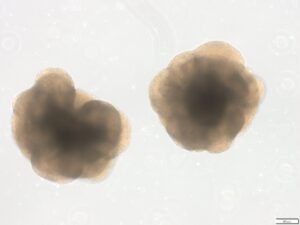
Cortical organoids, miniature brain structures grown from stem cells, have revealed new insights into the development of radial glial progenitor cells (RGPs) in the brain. The cerebral cortex, which is responsible for higher cognitive functions and sensory processing, relies on RGPs to generate all excitatory neurons during development.
Scientists from the Institute of Science and Technology Austria (ISTA) have now established a quantitative framework for tracking RGP lineage progression using a technique called Mosaic analysis with double markers (MADM)-based lineage tracing. By combining organoid systems with in vivo mouse embryonic stem cells, they were able to observe and compare the development of RGPs with those in the real mouse brain.
The researchers found that RGPs exhibit a high level of plasticity in proliferative potential within organoids, rather than following the strict timeline observed in vivo. Additionally, RGPs in the organoids showed increased lineage restriction, leading to a reduction in cell-type diversity among clonal cortical projection neurons, despite similar single-cell transcriptional signatures.
The team suspects that the lack of certain external signals, such as those present in the stem-cell niche, is responsible for this discrepancy. The stem-cell niche is a critical microenvironment that includes neighboring cells, blood vessels, signaling molecules, and growth factors, as well as mechanical signals. These factors influence the faithful temporal control of RGP lineage progression and the generation of clonal cortical cell-type diversity.
This study not only provides a robust protocol for producing cortical organoids from mouse cells but also highlights the importance of the stem-cell niche in brain development. The findings demonstrate the similarities between developmental processes in organoids and the mouse brain, while also identifying aspects that require further investigation due to the absence of specific external cues in organoids.
Written by urgent.news from GEN Biotechnology's reporting — not their text. Machine-written — may contain errors; check the original before relying on it.