Constitutional Court's ruling on Ramaphosa impeachment sparks political controversy
The Constitutional Court’s decision to reject the ATM’s bid to appeal the suspension of Ramaphosa’s impeachment proceedings has sparked fresh criticism from political parties, while analysts warn that legal delays could prolong the process.
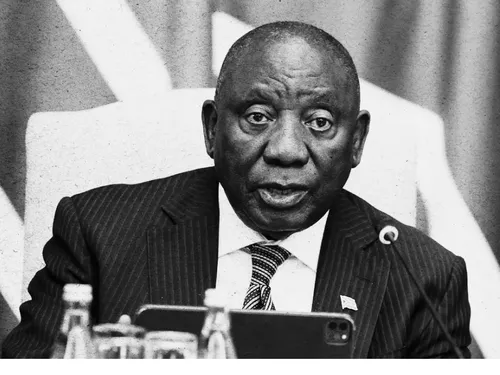
The Constitutional Court’s recent decision not to immediately hear the African Transformation Movement’s challenge to the suspension of President Cyril Ramaphosa’s impeachment proceedings has ignited a new political and constitutional debate. The ATM and the MK Party are questioning the implications of the ruling on accountability and transparency.
Political analysts suggest that the prolonged process could exhaust the impeachment proceedings before Ramaphosa’s term ends. The court rejected the ATM’s appeal against the Western Cape High Court order that suspended public hearings by Parliament’s Impeachment Committee until Ramaphosa’s review application is finalized. The Western Cape High Court had previously barred the Impeachment Committee from holding any public hearings until after Ramaphosa’s review application, which seeks to overturn the Independent Panel’s report that he had a case to answer.
The Constitutional Court’s ruling stated that the outcome of Ramaphosa’s review application could render the interim injunction unnecessary and found that it was not in the public interest to hear the matter at this stage, given the imminent determination of the review application at the Western Cape Division of the High Court. The court also declined to allow a replying affidavit from the ATM and the MK Party and UAT, concluding that no case was made out for leave to file a replying affidavit.
ATM’s spokesman, Zama Ntshona, criticized the court for missing a “golden opportunity” to clarify a constitutional question with broader implications. Ntshona highlighted the question of whether a lower court could interdict an apex court order and accused Ramaphosa of using legal channels as a “delay tactic” to postpone accountability proceedings.
The ATM believes there is evidence supporting all four complaints raised before the Section 89 Independent Panel and plans to confront Ramaphosa directly in the Western Cape High Court. MK Party spokesperson Sifiso Mahlangu echoed the ATM’s criticism, questioning public confidence in the judiciary if it repeatedly sides with those in power.
Analyst Kenneth Mokgatlhe-Kgwadi from the Middle East African Research Institute expressed disappointment with the court’s decision, arguing that it should allow Parliament to fulfill its constitutional oversight role. He accused Ramaphosa of employing the legal system to obstruct the Impeachment Committee’s role.
Written by urgent.news from IOL's reporting — not their text. Machine-written — may contain errors; check the original before relying on it.