Colombia survivors reflect on quake terror as rescuers search rubble
The search for survivors from Colombia's earthquake grows more desperate as residents share their survival stories with the ABC.
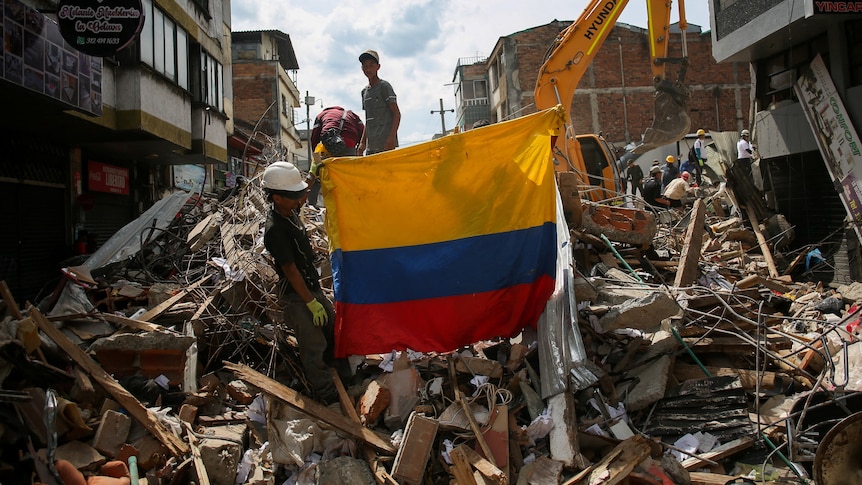
More than 48 hours after a devastating earthquake struck western Colombia, rescuers are still searching for survivors among the rubble. Over 250 people have died, with the Colombian government declaring three days of mourning. Schools and sports arenas have been converted to temporary shelters, while hospitals are overwhelmed with the influx of injured.
The search for survivors is growing more desperate as rescuers enter a third day of efforts. Alejandro Eder, the mayor of Cali, stated that rescue teams are still finding signs of people alive under the debris, racing against time to save them. Every minute is vital in the next 20 hours. The Colombian government's new administration, led by President Abelardo de la Espriella, is facing the challenge of addressing the disaster, as he was sworn in only days before the earthquake hit.
Around 200 people remain missing, but a civilian-run database estimates over 4,000 people are still unaccounted for. Concerns arise about where displaced Colombians will find shelter and assistance. In Pereira, a city in the Andes foothills, Juliana Maya lost her bakery and family home in the quake, with her elderly mother-in-law and hospitalised father-in-law left without a place to stay.
Walter Arroyave's family was separated when the earthquake struck, leaving him alone and panicked as he searched for his wife and daughter. The roads were congested, and power outages disrupted traffic lights, causing delays in reaching his family. In Cali, numerous buildings have collapsed, and people have formed human chains to clear debris.
Bogotá fire department official Camilo Cano said rescue efforts are still focused on removing debris, with hope for finding victims alive within four days. Cali resident Abraham Gutierrez's elderly mother, who had mobility issues due to cancer, is receiving care in a hallway at a hospital, as facilities are overwhelmed and the city's largest hospital sustained significant damage.
Aid groups from previous peace accords are now pivoting to disaster relief, while international nations such as the US, Mexico, Brazil, and Ecuador offer assistance, with El Salvador sending 100 tonnes of supplies.
Written by urgent.news from ABC News AU's reporting — not their text. Machine-written — may contain errors; check the original before relying on it.