China is sending scientists to Iran for rare earth ‘exploration and processing’
China is expanding its scientific collaboration with Iran into the strategically sensitive field of rare earths, including processing technologies that Beijing has increasingly sought to protect from overseas transfer. The National Natural Science Foundation of China (NSFC) unveiled the latest joint workshop programme with its Iranian counterpart on Monday, listing the “exploration and processing…
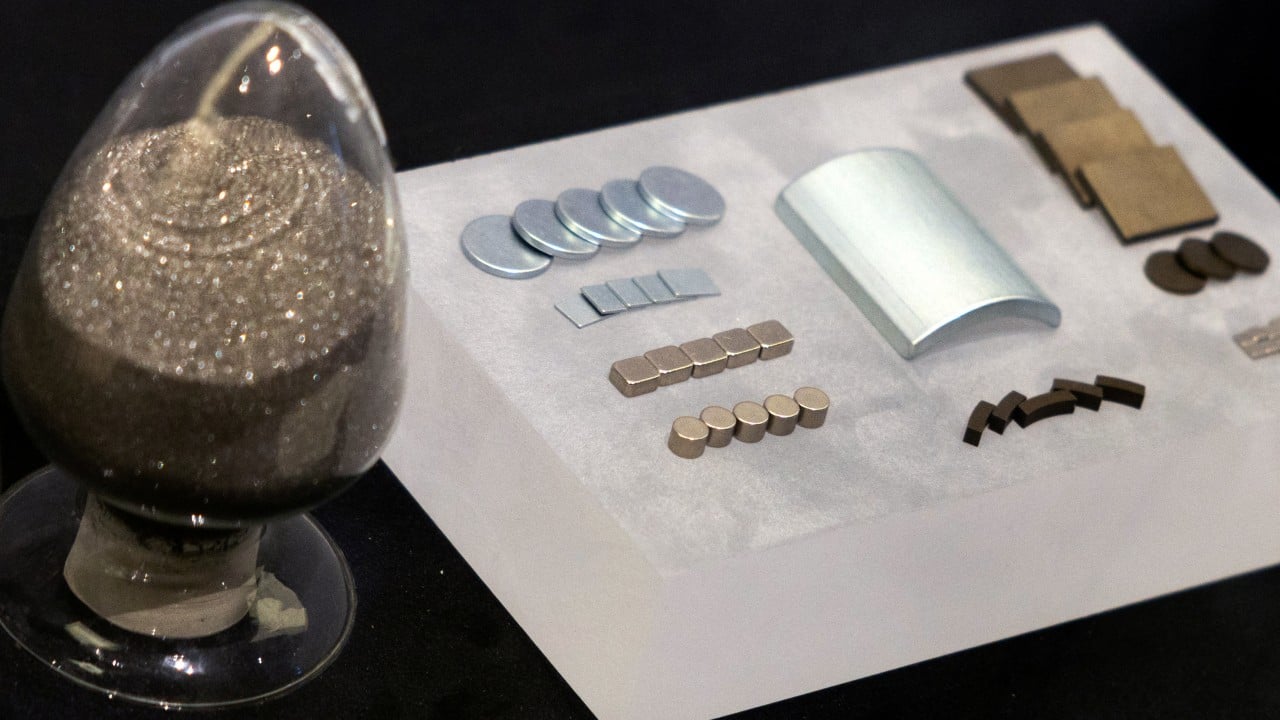
China is extending its scientific collaboration with Iran into the strategic field of rare earths, focusing on exploration and processing technologies that Beijing aims to safeguard from overseas transfer. The National Natural Science Foundation of China (NSFC) announced a new workshop program with its Iranian counterpart on Monday, designating the exploration and processing of rare earth elements as one of five areas for cooperation.
Chinese researchers will receive 30,000 yuan (around $4,200) per workshop to cover expenses like meetings, accommodation, and domestic travel. The Iranian side will assist with international travel for Iranian participants and provide lodging for Chinese scientists visiting Iran, according to the NSFC. This cooperation arrives at a sensitive juncture, with the US-Israel war on Iran still ongoing.
Rare earths, a group of 17 metals possessing unique magnetic and electronic properties, are crucial to modern weaponry, from missiles and fighter jets to radar systems and other electronic components. Earlier this month, Reuters reported that the US had depleted nearly all its long-range precision missiles during the five-month conflict.
On Friday, the Trump administration announced a $3 billion investment in critical mineral and battery projects, aiming to bolster weapons stocks and lessen reliance on Chinese supply chains. China boasts the world's largest rare earth reserves and controls the majority of global production and processing, while also tightening restrictions on the export of related technologies.
Following US President Donald Trump's imposition of a trade war on China last year, Beijing retaliated with rare earth export controls, disrupting supplies to American manufacturers and highlighting Washington's dependency on China. Iran's potential rare earth deposits, though still largely unexplored, could be substantial. Geological surveys indicate rare earth anomalies across approximately 7,000 square kilometers (4,000 square miles) of central Iran, as highlighted in a February analysis by the Hague Research Institute.
However, Iran's extraction and processing capabilities remain in a nascent stage, with the country far from achieving industrial-scale operations. The partnership between the two national science foundations has a history dating back to 2017, when they signed a memorandum of understanding (MOU) in Beijing. The NSFC stated that Iran is a crucial country within the Belt and Road Initiative, and the signing of the MOU is expected to enhance scientific and technological cooperation between the two nations, ultimately benefiting their citizens.
Since then, the two agencies have been funding joint research projects across a diverse range of fields, from mathematics and biology to medicine, renewable energy, materials science, climate change, and artificial intelligence (AI). The joint workshop program was initiated in 2024, initially focusing on areas such as climate change, AI, advanced materials, and manufacturing, with grants of 150,000 yuan for each workshop.
Apart from rare earth exploration and processing, this year's call also encompasses nano materials for disease detection, pollution monitoring, earthquake-resistant construction, and greener manufacturing methods.
Written by urgent.news from Reuters Business via SCMP's reporting — not their text. Machine-written — may contain errors; check the original before relying on it.
This story
This is one outlet's version. Read the fullest account.