Broadcasters to be barred from Eurovision song contest if state involved in ‘armed conflict’
Organisers says new rule will ensure contest provides ‘safe and welcoming environment’ for participants Broadcasters will no longer be eligible to host the Eurovision song contest if their state is involved in an “armed conflict” or “sensitive geopolitical situation”. Eurovision is traditionally hosted by the previous year’s winning broadcaster, with the next show due to take place in Bulgaria in…
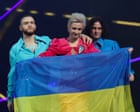
The European Broadcasting Union (EBU) has implemented new rules for the Eurovision song contest, barring broadcasters from participating if their state is involved in an "armed conflict" or "sensitive geopolitical situation." This change aims to provide a "safe and welcoming environment" for participants. The Eurovision song contest is traditionally hosted by the previous year's winning broadcaster, with the next show set to take place in Bulgaria in 2027.
However, the EBU altered the rules for 2027 following feedback from participating broadcasters. The new regulations will provide clarity for artists and production staff, ensuring the contest remains a safe and welcoming event. Eurovision has previously faced protests over the participation of Israel, a competitor since 1973. Five longtime participants - Spain, the Netherlands, Ireland, Iceland, and Slovenia - boycotted this year's competition in Vienna due to the organizers' refusal to exclude Israel from the contest over its actions in the war against Hamas in Gaza and violence against Palestinians in the West Bank.
It remains uncertain if or when these boycotting countries will rejoin the event. Israel finished second in this year's contest, mirroring their performance in 2025. Eurovision Song Contest Director Martin Green stated that the contest is constantly evolving, and these annual rule reviews ensure the event remains fair, transparent, and consistent for all participants, including the millions who engage with the event globally.
The EBU also mentioned that in potentially challenging situations outside armed conflict, the winning country will undergo an independent security assessment to determine its eligibility to host the contest. If ineligible, an alternative broadcaster will be identified to assume all rights, obligations, and liabilities associated with hosting.
The 2023 Eurovision song contest was held in Liverpool after Ukraine's victory the previous year, as Russia's war made it impossible to begin the necessary preparations. The new rule modifications also raise the minimum age for artists from 16 to 18. Despite the impact of the boycott on Eurovision's finances and viewership, the contest is expected to expand.
A spin-off Eurovision song contest Asia is set to take place in Bangkok in November, and Canada has been announced as the first new participant since Australia in 2015, marking the first expansion beyond geographic Europe since then. Australia remains an associate member.
Written by urgent.news from The Guardian Australia's reporting — not their text. Machine-written — may contain errors; check the original before relying on it.