Broadband Alone Won't Build South Africa's Digital Future
South Africa’s partnerships to expand broadband access in schools represent an important step towards closing the digital divide. However, research from the University of Johannesburg’s Centre for Social Development in Africa shows that internet connectivity alone cannot deliver genuine digital inclusion.
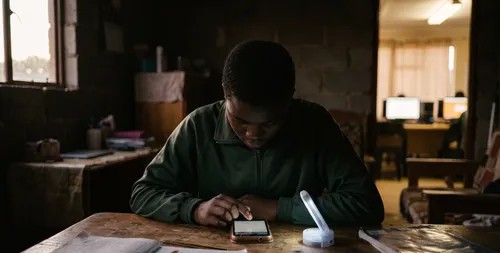
South Africa's Communications and Digital Technologies Minister, Solly Malatsi, recently unveiled plans to collaborate with telecommunications firms to enhance broadband access in schools across the nation. The minister's announcement was seen as a significant stride towards closing the digital divide. This is because, in today's world, being cut off from the digital realm often translates to exclusion from education, employment, and opportunities.
As more classrooms adopt digital tools, government services increasingly move online, and artificial intelligence reshapes the job market, connecting schools is no longer simply a desirable objective; it has become a critical necessity. However, while this announcement is certainly commendable, it should also spark a broader dialogue on what genuine digital inclusion truly entails.
If we believe that merely linking schools to broadband is sufficient to equip young people for the future, we run the risk of conflating access with opportunity. While fibre cables can certainly bring the internet into a classroom, they alone can't guarantee that a young person will leave school with the confidence, support, and opportunities required to thrive in a digital economy.
This distinction forms the crux of our latest study, which delved into what digital inclusion truly means for young individuals in various Johannesburg communities. For years, South Africa has quantified digital advancement by tallying the number of smartphones in circulation, the growth of broadband networks, and the number of households with internet access.
While these metrics represent significant achievements and deserve commendation, they offer limited insight into whether young people can effectively utilize technology to enhance their lives. Simply owning a smartphone doesn't equate to securing employment online. Having Wi-Fi at school doesn't automatically translate to improved learning outcomes.
Being connected doesn't necessarily imply being included. A critical finding from our research stemmed not from poring over international digital literacy frameworks or scrutinizing government policies, but from engaging in conversations with young people themselves. Our aim was to grasp the day-to-day challenges they encounter, and what we discovered contradicts many prevailing assumptions that guide public policy.
Young people rarely lament a lack of motivation to acquire digital skills. Instead, they articulate the daily obstacles that render meaningful engagement in the digital realm far more challenging than policymakers often anticipate. They discuss the exorbitant cost of mobile data, compelling them to conserve every megabyte; unreliable connectivity, which disrupts online learning and job applications; shared devices that limit opportunities to hone new skills; and digital platforms that often fail to resonate with their languages, cultures, and lived realities.
These firsthand accounts made it abundantly clear that the primary obstacle many young people face is not merely getting online; it's staying online long enough, frequently enough, and meaningfully enough to transform digital access into better education, dignified work, and economic opportunity. This may seem like a subtle distinction, but it radically alters the way we should approach digital policy.
Picture two Grade 11 students in schools that have recently connected to broadband. Both are adept at searching for information online, completing assignments using digital tools, and leveraging artificial intelligence to aid their studies. On paper, both could be deemed digitally proficient. Yet, once school concludes, their trajectories diverge dramatically.
One returns to a stable broadband connection, consistent electricity, a personal laptop, and parents capable of supporting their education. The other faces high prepaid data expenses, frequent power outages, a shared smartphone, and a household where every rand must be carefully allocated to cover food, transportation, and rent.
While both students may possess comparable digital competencies, their prospects of translating those skills into academic success, employment, or entrepreneurship are vastly disparate. The disparity lies not in what they know, but in their ability to apply their knowledge. This underscores why our research relies on economist Amartya Sen's Capability Approach, which posits that development should not be gauged solely by the resources individuals possess, but by the real freedoms they have to utilize those resources to improve their lives.
Translated to South Africa's digital future, this implies acknowledging that affordable data, dependable electricity, quality education, household income, disability inclusion, language support, and family backing all influence whether digital technology becomes a pathway to opportunity or merely another manifestation of inequality.
A smartphone alone cannot unlock opportunity unless there's affordable data to utilize it. Broadband can only transform lives if young people have the necessary support and confidence to leverage it. Digital skills matter only if they can be converted into stable employment, further education, and active participation in society.
Minister Malatsi's broadband initiative should thus be viewed as a crucial starting point rather than the final destination. Connecting schools represents one of the most prudent investments South Africa can make, but if we cease there, we will only have addressed one facet of a much larger problem. Constructing an inclusive digital society also necessitates making data more affordable, bolstering public education, formulating digital platforms that cater to all South Africans, investing in inclusive technologies for individuals with disabilities, and creating more avenues for young people to apply their digital skills beyond the classroom.
It also entails engaging young people in these dialogues, as our research unequivocally demonstrates that they hold the key to unlocking the full potential of South Africa's digital future.
Written by urgent.news from IOL's reporting — not their text. Machine-written — may contain errors; check the original before relying on it.