As Hitler Loomed, Hannah Arendt Undertook a Deep Analysis of German Antisemitism
Hannah Arendt’s 1936 lectures in Paris, where she had spent the past year and a half, were the first signals to the émigré population at large that she still had something to say. They were her attempt to introduce her
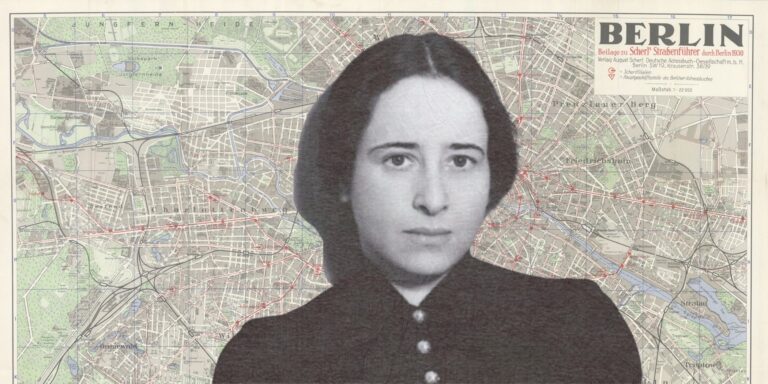
Hannah Arendt's 1936 lectures in Paris marked the first indication to the displaced population that she still had valuable insights to share. Her aim was to share her work on modern antisemitism, which she had been developing since 1934 and was nearly finished. She wished to engage in discussions and refine her work in the process.
A 159-page typed manuscript, intended for publication, was part of her papers. This manuscript, still incomplete, contained a section titled "The Aristocracy Turns Antisemitic," referencing a "next chapter." The manuscript, dated 1937-38, suggests that a significant portion of it was planned for inclusion in a book project she had mentioned in 1934.
Her pessimism was evident throughout, as she was confident that the antisemitism empowered in Germany could only exist in that country. Arendt began her analysis with the works of Christian Wilhelm Dohm and Johann Andreas Eisenmenger, and later included Carl Wilhelm Friedrich Grattenauer's Wider die Juden, aligning them with the Romantic movement's intellectual elite.
She also cited Wilhelm Marr's Sieg des Judentums über das Germanentum, aligning her work with the antisemitic aspirations of the National Socialists, who came to power in 1933. Arendt's analysis of antisemitism also touched upon Jewish history, emphasizing their interconnectedness. She believed that the feeling of superiority among German Jews was a mirage that would soon shatter.
The year 1933 marked the end of the age of bourgeois emancipation and Jewish liberation, signaling the arrival of a new sense of security in the East that was ultimately a pipe dream. Arendt argued that the experiences of German Jews served as an example, warning other nations about the potential for a "German catastrophe" and the weak reaction of German Jews and "world Jewry."
She believed that the "German catastrophe" and the weak response from "world Jewry" would shed light on the past 150 years, highlighting a unique structure of history centered around antisemitism. This failure to grasp this reality was due to Jewish history being traditionally viewed as a history of victimization. Arendt contended that within this model, antisemitism was merely an opinion held by individuals, a fatal error that could eventually lead to the Jews being assimilated into the majority societies.
Written by urgent.news from Literary Hub's reporting — not their text. Machine-written — may contain errors; check the original before relying on it.