You can see both a partial solar eclipse and the Perseid meteor shower peak on the same day this week. Here’s when to look up
Get ready for a rare double feature in the sky on Wednesday, when parts of the United States will be able to see a partial solar eclipse during the day, then the Perseid meteor shower peak in the evening. Meanwhile, Europe is on deck for a full solar eclipse. Here’s what to know. Timing and forecast for the 2026 solar eclipse A total solar eclipse , when the moon completely covers the sun, will…
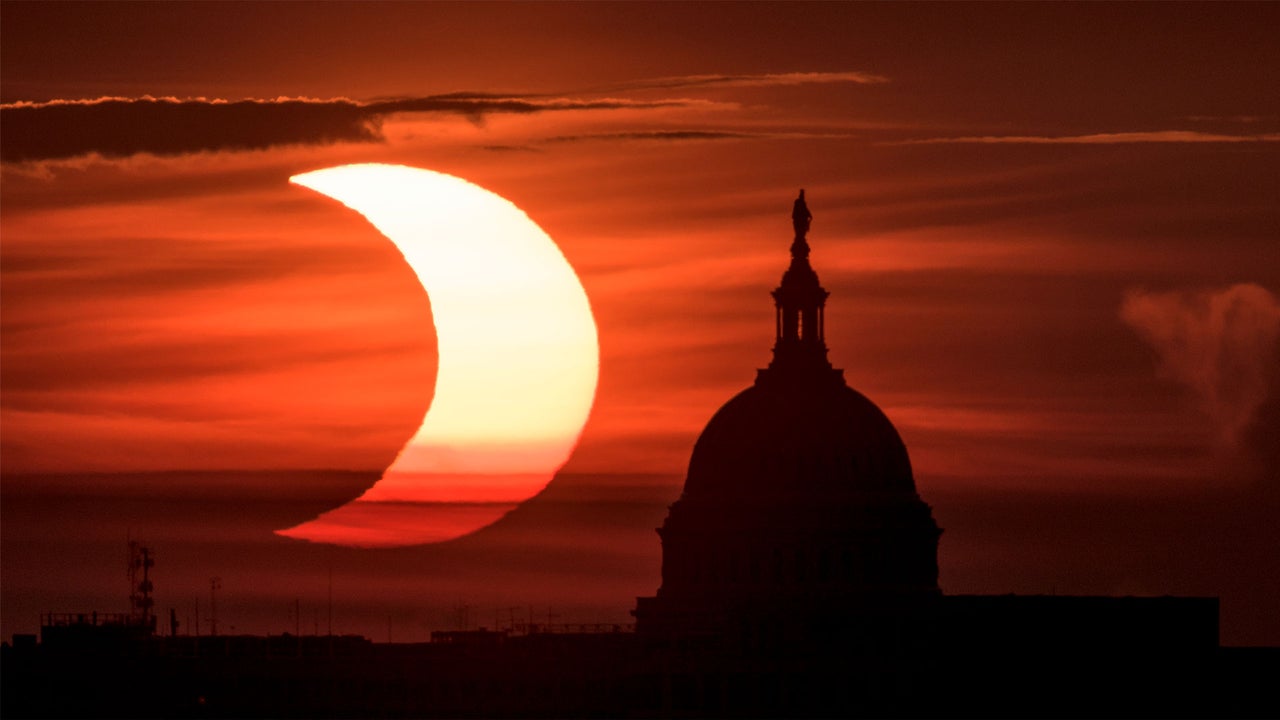
On Wednesday, August 12, some regions of the United States and Europe will witness a rare double event - a partial solar eclipse followed by the peak of the Perseid meteor shower. A total solar eclipse will traverse Greenland, Iceland, northern Russia, the Atlantic Ocean, Spain, and a small part of Portugal. Maximum eclipse occurs at 1:46 p.m. ET, with the sun becoming totally dark in parts of Russia and Greenland, while other areas experience a partial eclipse. This is the first total solar eclipse in Europe since 1999.
In the U.S., the eclipse will be visible from Alaska to North Carolina, starting around noon and lasting until mid-afternoon for those east of the Mississippi River. However, it is important to note that staring directly at the sun during a partial eclipse is unsafe. NASA recommends using ISO 12312-2 certified solar eclipse glasses or similar protective devices to view the event without risking eye damage.
The Perseid meteor shower will peak on the evening of August 13 into the early hours of August 14. This annual event, caused by debris from comet 109P/Swift-Tuttle, typically produces 50 to 100 meteors per hour under optimal conditions. Meteor viewing is best between midnight and 5:00 a.m. local time, with a dark sky being crucial for optimal viewing. The absence of a full moon on August 13 should provide excellent conditions for meteor watching, as minimal moonlight will not interfere with the celestial display.
Written by urgent.news from Fast Company's reporting — not their text. Machine-written — may contain errors; check the original before relying on it.