Why the world needs all three 30-meter class telescopes
If you want to view the Universe in way that take us past our current frontiers, you only have a few options. You can build a larger telescope: with greater surface area to collect light and a larger diameter to increase your resolution. You can polish your mirror’s surface to be more reflective and smoother: down to nanometer-scale precision. You can keep it clean and pristine: reducing your…
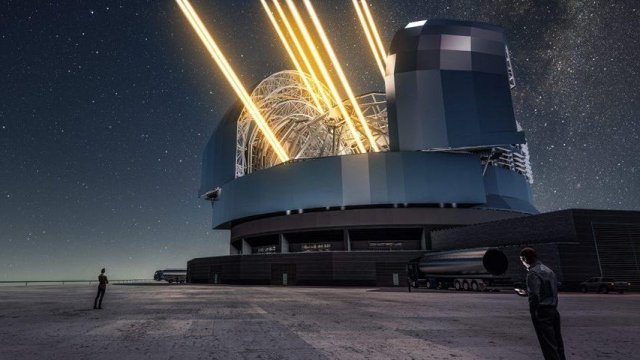
The world stands to benefit immensely from the combined capabilities of three upcoming 30-meter class telescopes: the European Extremely Large Telescope (ELT), the Giant Magellan Telescope (GMT), and the Thirty Meter Telescope (TMT). Each observatory aims to surpass its predecessors by leveraging advanced technology and innovative design.
While space telescopes offer unique advantages, ground-based observatories hold several key benefits. These include unrestricted size and weight, no launch costs or failure risks, and the ability to easily maintain and upgrade facilities on-site. Ground-based telescopes have also proven highly adaptable, with many 20th-century observatories still functional due to advancements in instrumentation.
The three proposed 30-meter telescopes each bring distinct advantages to the table. The GMT, despite its smaller size, excels in wide-field imaging and scientific applications. The ELT, as the largest of the trio, promises unparalleled resolution. Meanwhile, the TMT, positioned in the northern hemisphere, will provide access to regions of the sky currently unseen by the ELT or GMT. Collectively, these telescopes will enable groundbreaking scientific discoveries that no single observatory could achieve alone.
The primary mirror size of a telescope is paramount in determining its effectiveness. A telescope with twice the diameter collects four times the light, allowing observation of fainter, more distant objects and providing greater insight into the cosmos. Ground-based telescopes capitalize on this advantage, offering unparalleled light-gathering power and resolution compared to their space-based counterparts.
In summary, the ELT, GMT, and TMT represent a monumental leap forward in ground-based optical astronomy. By pooling their resources and expertise, humanity can unlock the secrets of the universe in ways previously unimaginable.
Written by urgent.news from Big Think's reporting — not their text. Machine-written — may contain errors; check the original before relying on it.