Why the Perseids are the Most Famous Meteor Shower
The past, present, and future of this brilliant display The post Why the Perseids are the Most Famous Meteor Shower appeared first on Nautilus .
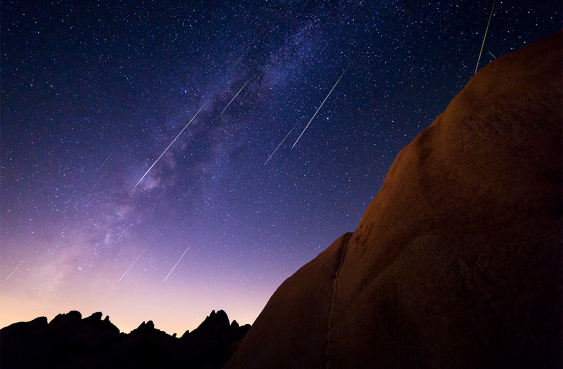
Every year around mid-August, the Perseid meteor shower graces the skies of the Northern Hemisphere. This phenomenon, which peaks around August 10-12, is a celestial event that stargazers eagerly anticipate due to its regularity and dazzling fireballs. The Perseids earn their name from the constellation Perseus, where they seem to emanate from.
However, ancient Romans linked the meteor shower to a different figure, Priapus, a fertility god sometimes humorously depicted with an oversized genitalia. To the Romans, the Perseids were a symbol of Priapus's blessing for a bountiful harvest. Over time, the event was linked to the August 10 feast of St. Lawrence in Catholicism, earning the moniker "St. Lawrence's Tears."
The source of the Perseids is the comet Swift-Tuttle, which orbits the sun every 133 years. Its path intersects with Earth's in mid-August, when our planet passes through the trail of dust and debris left behind by Swift-Tuttle. As these particles enter Earth's atmosphere, they disintegrate, creating the spectacular displays of light that are characteristic of the Perseid meteor shower.
Astronomers predict that the 2028 Perseids could be the most impressive in recent years, thanks to Swift-Tuttle's dense debris. Despite the awe-inspiring nature of this annual event, there is a serious concern that Swift-Tuttle could collide with Earth in the distant future, potentially causing catastrophic damage. However, there is no immediate cause for alarm. In the meantime, enthusiasts can look forward to the next spectacular display of the Perseid meteor shower in mid-August 2028.
Written by urgent.news from Nautilus's reporting — not their text. Machine-written — may contain errors; check the original before relying on it.