Why "chipflation" is here to stay
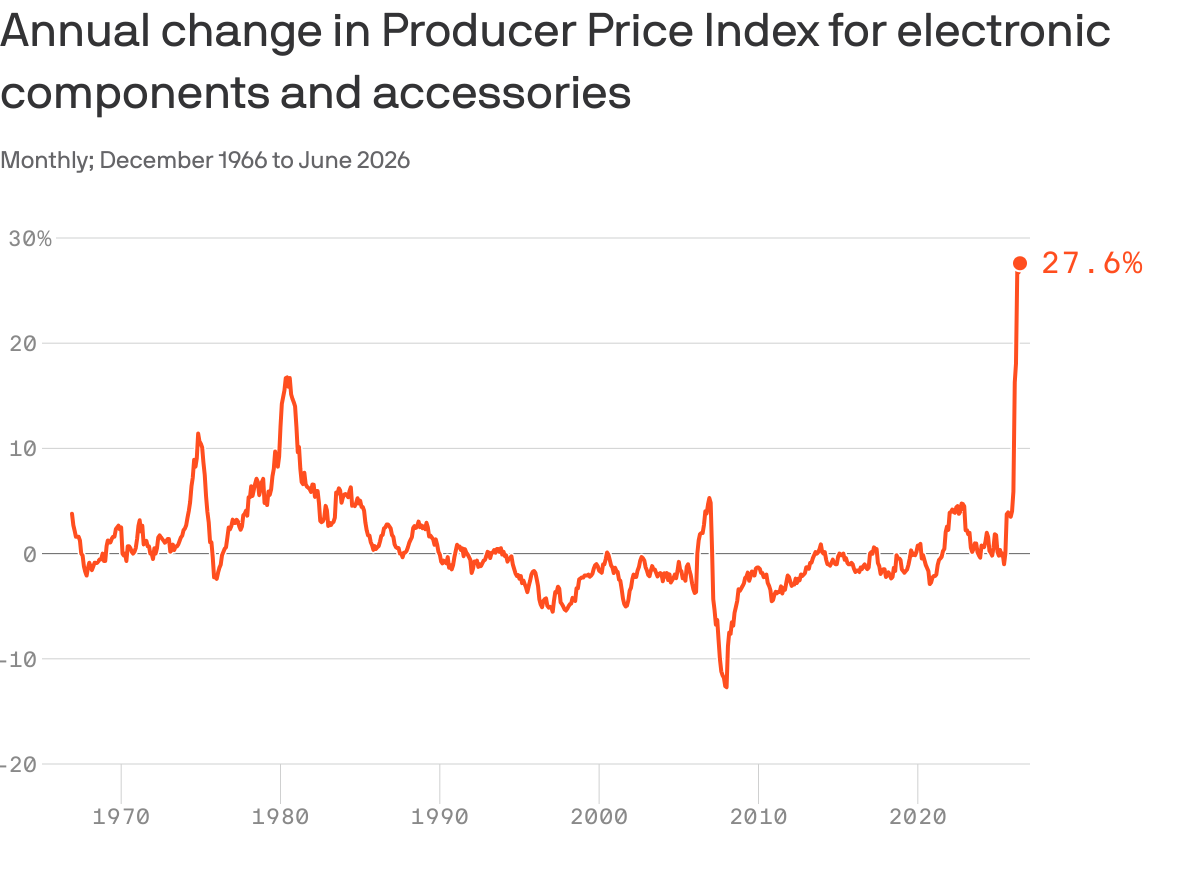
Data: U.S. Bureau of Labor Statistics via FRED ; Chart: Emily Peck/Axios Memory chip prices are skyrocketing, thanks to AI demand, and there's no end in sight. Why it matters: "Chipflation" is pushing up the prices for electronic goods like smartphones and laptops, as well as the costs for cloud storage and hardware — it also helps explain the eye-popping ascents in semiconductor stock prices.…
The term "chipflation" is gaining attention as memory chip prices surge due to increased demand from artificial intelligence (AI) applications. This phenomenon is causing prices to rise for various electronic products, including smartphones, laptops, cloud storage, and hardware, as well as driving up stock prices for semiconductor companies. While the overall impact on inflation may be modest, the scale of this boom is unprecedented.
Producer Price Index (PPI) data for electronic components and accessories, which measures the costs that companies incur for semiconductor chips and other electronics and accessories, has increased by 27.6% in June compared to the same period last year. This represents the largest increase in records dating back to 1966, surpassing the price surges during the early PC era in 1980 and the semiconductor shortages during the COVID-19 pandemic.
The surge in memory chip costs is primarily driven by large tech companies, such as Meta, Microsoft, and Alphabet, which are locking up memory supply through long-term agreements. This leaves traditional PC and phone manufacturers competing for a shrinking supply of memory chips. Apple, for example, is reportedly testing memory chips from Chinese manufacturer CXMT as it grapples with rising costs, though it would require White House approval to bypass existing regulations that typically prohibit such partnerships.
The dramatic rise in memory prices marks a reversal from the long-standing trend of computer memory becoming cheaper over time. In fact, memory prices have increased more than sixfold over the past year, according to a Morgan Stanley note that first coined the term "chipflation." The note highlights that this trend is not expected to reverse anytime soon, as memory chips play a crucial role in the functioning of electronic devices, from powering web searches and video playback to supporting AI models that generate responses to user queries.
As the effects of chipflation begin to manifest, companies are increasingly reluctant to reduce tech spending despite rising costs. They now exhibit a stronger desire to maintain their technology investments, driven by the fear of missing out on essential procurement opportunities, which Morgan Stanley analysts have labeled "Fear of Missing Procurement" (FOMP).
Investors and analysts will be closely watching the upcoming July Consumer Price Index report, which is scheduled for release on Wednesday, to gauge the extent of any price increases experienced by consumers in the electronics sector. Morgan Stanley anticipates a minimal impact on the overall Consumer Price Index (CPI), with an estimated increase of only 0.10 percentage points; however, the cost of computers may see a substantial 10% year-over-year rise.
Written by urgent.news from Axios's reporting — not their text. Machine-written — may contain errors; check the original before relying on it.