Where to enjoy the partial eclipse spectacle
Venues gear up to help people enjoy the partial eclipse safely from South West vantage spots.
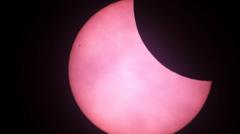
Stargazers in the South West of England and the Channel Islands will have several options to safely enjoy the partial eclipse of the sun. Various free and ticketed events are being organized across the region, with venues ranging from beachside locations to observatories and even pubs with their own observatories.
Charlie Payne, who is organizing an event on the Isles of Scilly, recommends finding a spot with a clear view and line of sight to the horizon when watching the eclipse. Directly looking at the sun can cause serious damage to the eyesight.
In Devon and Cornwall, the eclipse will start at around 18:18 BST, peak at 19:15, and finish at approximately 20:10. On the Isles of Scilly, the Cosmos Community Observatory will host a free event between 18:00 and 20:00 on the Karma Hotel lawns. Attendees can view the partial eclipse through telescopes equipped with solar filters and eclipse glasses.
Cornwall's Kernow Astronomers will distribute 420 eclipse glasses at their event at the National Trust car park at Carnewas, near Newquay. The Smugglers Rest in Talland Bay near Looe will host a paid ticket event, with proceeds going towards an access ramp. Devon's Plymouth Astronomical Society plans to hand out eclipse glasses at Lowery Cross near Yelverton and also view the Perseids meteor shower later in the evening.
The Norman Lockyer Observatory in Sidmouth will host a paid event from 17:00, covering both the partial eclipse and the Perseids meteor shower. Guests can enjoy storytelling at 20:30 and view the eclipse safely with live streaming from a Spanish location expecting a full eclipse. In Exmoor, the Poltimore Inn, which has its own observatory, will host a paid event. The inn is located in a dark sky reserve, one of few in England with its own observatory.
Guernsey's La Société Guernesiaise recommends visiting the west coast of the Channel Island to enjoy the eclipse. They advise using eclipse glasses or projecting the sun onto a piece of card to prevent eye damage. Jersey Astronomy Club will set up solar telescopes at Le Braye on St Ouens Bay and provide solar glasses for visitors to wear. They also warn against using binoculars or telescopes without proper solar filters to avoid risking blindness.
Written by urgent.news from BBC Science's reporting — not their text. Machine-written — may contain errors; check the original before relying on it.