US swaps ideology for ‘flexible realism’ and hard deterrence in Southeast Asia
Pentagon policy chief Elbridge Colby has pressed Southeast Asian nations to join a “flexible realism” strategy in the Indo-Pacific, as the United States prioritises practical defence cooperation and deterrence over ideology. Speaking at a forum in Manila on Monday, Colby said he would travel to Jakarta, Bangkok and Phnom Penh as part of his first official trip to Asia, delivering a message he…
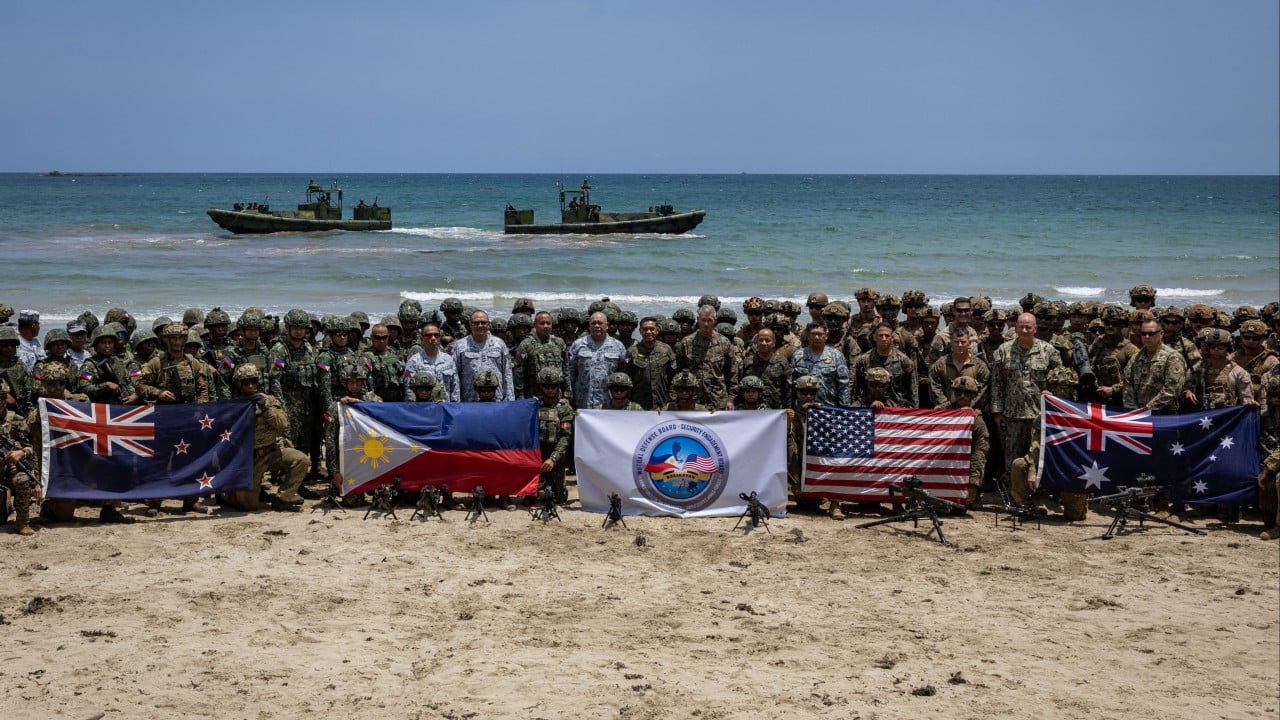
US policy chief Elbridge Colby has urged Southeast Asian nations to embrace a "flexible realism" strategy in the Indo-Pacific, prioritizing practical defense cooperation and deterrence over ideology. Colby, while speaking at a forum in Manila, announced a visit to Jakarta, Bangkok, and Phnom Penh, emphasizing that America's interest in the region is more engaged than ever before.
Instead of protectorates, the U.S. aims to build a resilient architecture of denial defense along the first island chain and across the wider Indo-Pacific. The first island chain encompasses the arc of islands running from Japan and Taiwan through the Philippines towards Borneo, central to U.S. and allied planning for deterring or containing Chinese military activity in the western Pacific.
Colby described the Trump administration's strategy in Asia as "hard" and "realistic," stating that the U.S. is evaluating its new multilateral security agreements with Association of Southeast Asian Nations (ASEAN) members by a much harder but more important metric. He named six ASEAN countries as U.S. partners: the Philippines, Thailand, Indonesia, Singapore, Vietnam, and Malaysia.
The U.S. is strengthening its forward posture, hardening its footprint, and driving deep operational compatibility with key countries willing to share the burden. Colby emphasized that the Department of Defense aims to transform legacy exercises into high-end combat-critical training that tests joint war-fighting readiness and ensures efficient operational integration.
Thailand, characterized as the U.S.'s oldest diplomatic partner in Asia, will focus on practically relevant matters rather than ideological lectures. For Indonesia, Colby prioritized deeper military cooperation with a pivotal strategic actor, while Vietnam and Malaysia were seen as compelling examples of flexible realism, with the U.S. leaving ideological preconditions aside and focusing on maritime domain awareness and hard power tools.
Singapore was described as the ultimate model of pragmatic cooperation, with shared reading of the region's security environment making U.S. support for rotational forces there an anchor. Professor Renato Cruz De Castro noted that Colby's message implied the U.S. would engage in "flexible realism, no [moral] values whatsoever," meaning the U.S. deals with nations even if they engage in practices like bamboo diplomacy with Taiwan.
Philippine Ambassador to Washington Jose Manuel Romualdez emphasized that Colby's speech focused on deterrence, with the alliance based on strengthening military capabilities and deterring any potential conflicts.
Written by urgent.news from South China Morning Post's reporting — not their text. Machine-written — may contain errors; check the original before relying on it.