Trouble sleeping in a new place? You’re not alone—it’s called the first-night effect
The first night in a new place is always the same for Robinson Leoni: He takes longer to fall asleep , wakes up more often during the night and gets less sleep overall. At home he averages seven hours . The first night away — with or without earplugs and regardless of the bed’s quality — his smartwatch tells him he gets about five. “I feel normal, you know, no stress, nothing, but it’s just I…
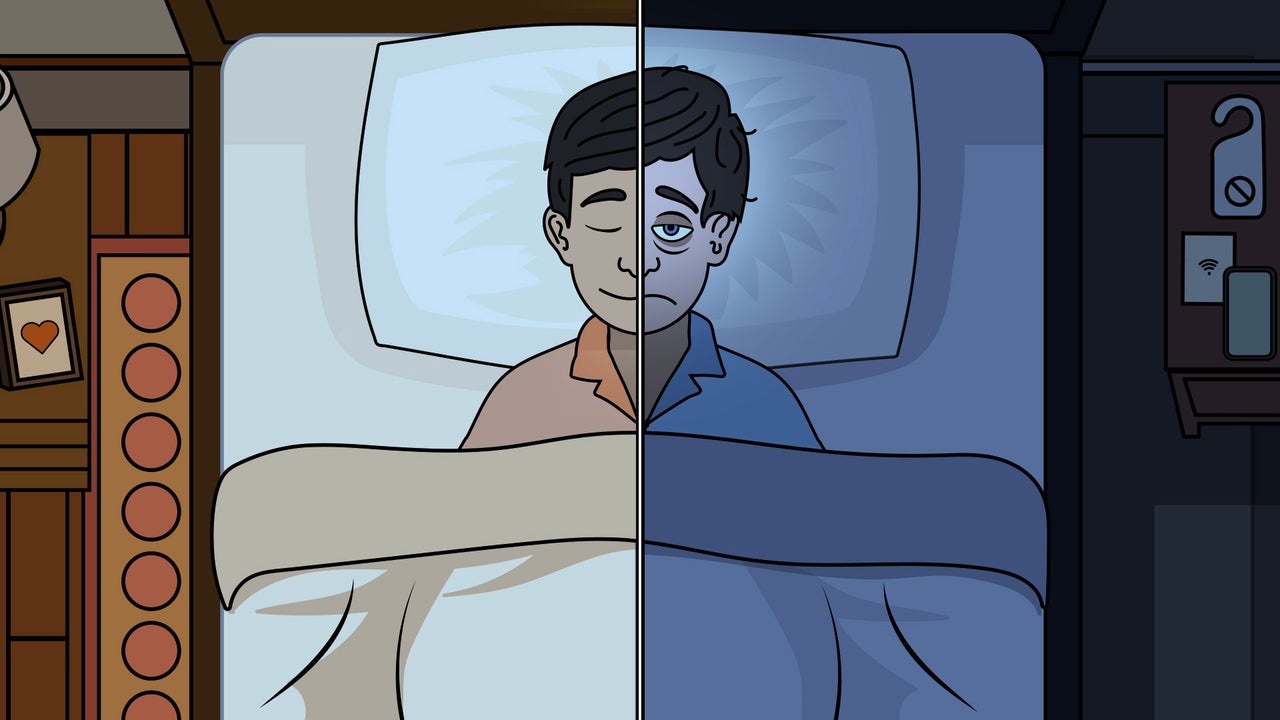
Experiencing difficulty sleeping in unfamiliar locations is a common occurrence, known as the "first-night effect," according to sleep specialists. Sales director Robinson Leoni, who frequently travels for work, struggles to fall asleep and wakes up frequently during the first night in a new place. Sleep researchers, including Anna Wick from the University of Freiburg in Switzerland, believe this phenomenon has evolutionary roots, as the brain remains alert in unfamiliar environments.
On average, people sleep 20 to 30 minutes less when in a new environment, and the frontal lobe, associated with deep sleep, exhibits increased activity, indicating vigilance. This effect is more pronounced in children, adolescents, and older adults, with individuals in their 20s being the least affected. Anxiety may contribute to the first-night effect, as the brain perceives novel environments as potentially dangerous.
Sleep researcher Ahmad Mayeli suggests that the brain's vigilance in unfamiliar settings is a survival mechanism present in other species, like dolphins. While the first-night effect typically diminishes after the initial night, factors such as travel itself, environmental stimuli (e.g., flashing lights), relational tensions, and pre-existing anxiety can exacerbate the issue.
To improve sleep during the first night, experts recommend adhering to good sleep hygiene practices, creating a familiar atmosphere, and employing relaxation techniques.
Written by urgent.news from Fast Company's reporting — not their text. Machine-written — may contain errors; check the original before relying on it.