Training the world’s future quantum experts
From 10 to 12 July 2026, CERN and the Open Quantum Institute (OQI) hosted the second edition of the Quantum Materials Hackathon, which brought together 34 students of over 30 nationalities. The students used quantum computing hardware and simulators to tackle real-world problems, guided by mentors from industry and the research community. Quantum materials are particularly important at CERN, as…
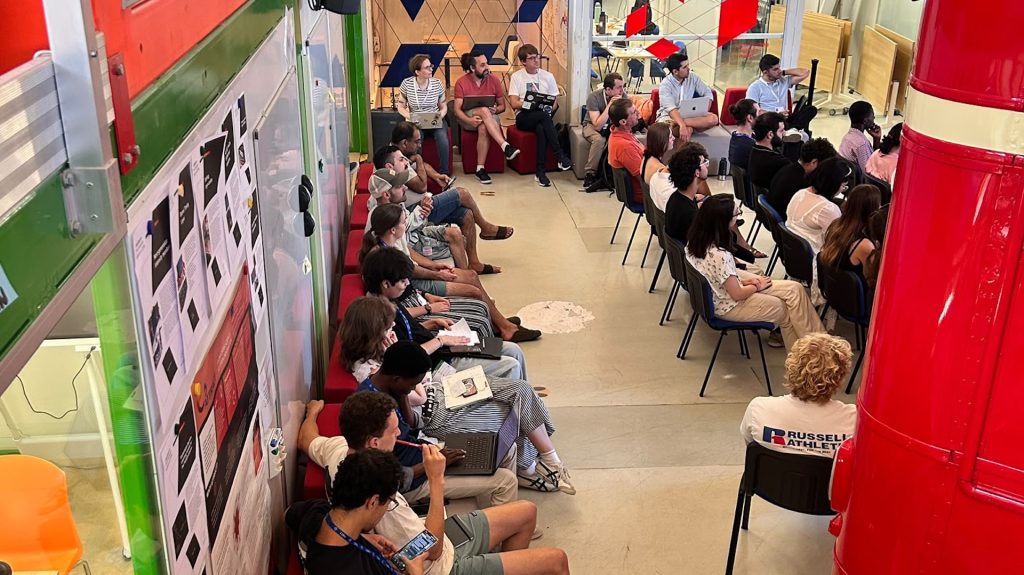
CERN and the Open Quantum Institute recently hosted the second annual Quantum Materials Hackathon, gathering 34 students from over 30 nations. The event, held from July 10-12, 2026, brought together industry and research mentors to guide the students as they utilized quantum computing hardware and simulators to address real-world challenges.
Quantum materials are crucial at CERN, as the technologies employed in particle accelerators and detectors heavily rely on their unique properties. Enhancing the understanding of these materials could result in significant improvements for CERN's scientific instruments. Beyond CERN, quantum technologies are pivotal in clean energy, health, food security, and the responsible use of natural resources such as lithium and cobalt.
Julia Thiele, an Open Quantum Initiative (OQI) Advisory Committee member, emphasized the importance of such hackathons in nurturing the next generation of leaders capable of applying quantum computing to real-world problems. With access to quantum hardware readily available through commercial services, the primary goal is to cultivate a workforce trained in its utilization.
The hackathon, which took place at CERN's IdeaSquare, was sponsored by Pasqal and the Swiss Quantum Initiative (SQI), with additional support from the University of Geneva and JIJ. Each team tackled a challenge proposed by industry or research partners, focusing on areas such as the creation of materials with minimal energy losses, the development of solar technologies with sustainable components, advancements in pharmaceutical development, and the study of challenging materials through quantum simulation.
The hackathon, organized by CERN's Stakeholder Engagement Group, Quantum Technology Initiative, CERN openlab teams, Open Quantum Institute (OQI), Quantum4Purpose, and Sparkboard, aimed to unite a diverse pool of global talent with Swiss university peers, leveraging the region's robust network of materials science expertise. Participants, including many first-timers running code on a real quantum computer, found the experience invaluable.
Elliot Amponsah, a student from Ghana's Kwame Nkrumah University of Science and Technology, highlighted the hackathon's significance in predicting drug dissolution rates with a small dataset, showcasing the potential of quantum algorithms to handle real-world noise. The winning team was mentored by experts from Pasqal, CERN Quantum Technology Initiative, BasQ, FHNW, and STFC, with judges representing CERN's Quantum Technology Initiative, QAI Ventures, Amazon Web Services, IBM Quantum, and Pasqal.
Written by urgent.news from CERN's reporting — not their text. Machine-written — may contain errors; check the original before relying on it.