This mushroom is behind ‘tiny people’ hallucinations
A researcher speaks about the Lilliputian mushroom, the decades-long mystery behind it, and the implications of a new hallucinogenic compound.
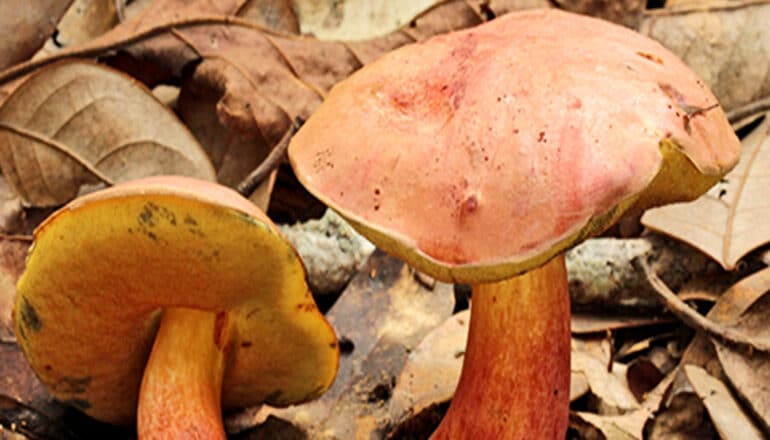
Scientists have pinpointed the source of the enigmatic "tiny people" hallucinations, reported across distant communities. These mystifying visions, known as Lilliputian hallucinations, involve perceiving diminutive humans interacting with their environment. Traditionally attributed to cultural factors, researchers from the University of Utah now assert that a specific mushroom species is the actual trigger.
Utilizing DNA sequencing, the team identified Lanmaoa asiatica as the culprit, spreading its effects from Southwest China to the northern Philippines. Notably, the mushroom lacks the known psychoactive compounds like psilocybin, instead harboring a novel hallucinogenic compound of significant interest. Co-author and doctoral student Colin Domnauer, along with mycologist Bryn Dentinger, delved into the history and implications of this discovery.
They discuss the mushroom, the enduring mystery behind the hallucinations, and the potential insights this new compound could provide into neurological disorders and perception. This research, published in Mycologia, sheds light on the complex relationship between biology, consciousness, and hallucinogenic substances.
Written by urgent.news from Futurity's reporting — not their text. Machine-written — may contain errors; check the original before relying on it.