The rise of Xenophobia and Islamophobia in South Africa
South Africa’s xenophobic politics is taking an increasingly Islamophobic turn, writes Dr Imraan Buccus. He argues that rhetoric once focused on migrants allegedly taking jobs or using public services now includes warnings about Muslim dominance, an Islamic invasion and Sharia law.
Across the world, right-wing parties have increasingly turned to xenophobia as a key political strategy. Migrants are blamed for a host of societal ills, from unemployment and strained public services to crime and social breakdown. In Europe, this anti-migrant sentiment is often blended with Islamophobia, portraying migrants and Muslims as threats to national culture and identity.
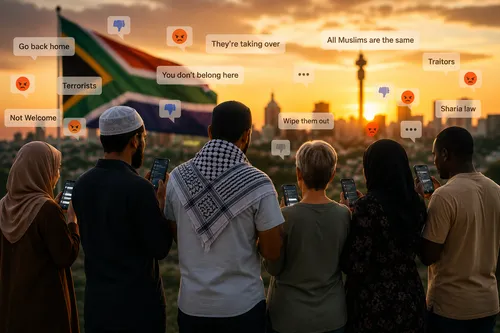
South Africa is now following this trajectory. The xenophobic campaign spearheaded by the March and March organization, backed by other authoritarian and far-right groups, is increasingly targeting Muslims alongside migrants. The rhetoric has shifted from arguments about migrants taking jobs and places in schools and hospitals, to warnings of a Muslim takeover, dominance, and the introduction of Sharia law.
Jacinta Ngobese-Zuma, the head of March and March, recently questioned on social media if South Africans were wrong to oppose Muslim organizations that provide humanitarian aid to migrants displaced by xenophobic violence. She suggested that foreign Muslims are seeking dominance in South Africa, claiming that this influx is a "serious religious takeover."
Despite the fact that Muslims make up only 1.5% to 2% of the population, such claims are not only absurd but also politically significant. Far-right politics thrives by exaggerating the power of a vulnerable group and portraying their mere presence as an orchestrated threat. In this context, migrants, Muslims, and terrorists are all lumped together as a single, dangerous category.
The target expands to include not just undocumented migrants, but also documented migrants, refugees, asylum seekers, foreign-owned businesses, and South Africans who defend them. Muslim organizations, businesses, and individuals who support migrants are now accused of being part of a larger conspiracy to buy influence and impose religious dominance.
The xenophobic and Islamophobic narratives reinforce each other, creating a narrative of ethnic nationalism where a particular community feels its control over territory, institutions, and political authority is slipping away. These dangerous ideas appeal to fears about identity, religion, and national survival, challenging democratic principles of due process and the rights of individuals to contribute to society.
The growing influence of far-right populism in South Africa extends beyond migrants and Muslims, targeting journalists, progressive lawyers, left-leaning trade unionists, and grassroots activists who speak out against xenophobia. March and March, the driving force behind this political shift, seeks to delegitimize constitutional and humanitarian opposition to xenophobia, posing a significant threat to South Africa's democracy.
Written by urgent.news from IOL's reporting — not their text. Machine-written — may contain errors; check the original before relying on it.