The Rise of AI-Native DevOps: How AI Is Reshaping Software Delivery in 2026
For years, DevOps had a pretty straightforward mission: help teams ship reliable software faster by getting development and operations folks working together. Tools like automation, continuous integration, continuous delivery, infrastructure as code, and better observability have all been key pieces of the puzzle. But now, things are shifting again. This time, artificial intelligence is changing…
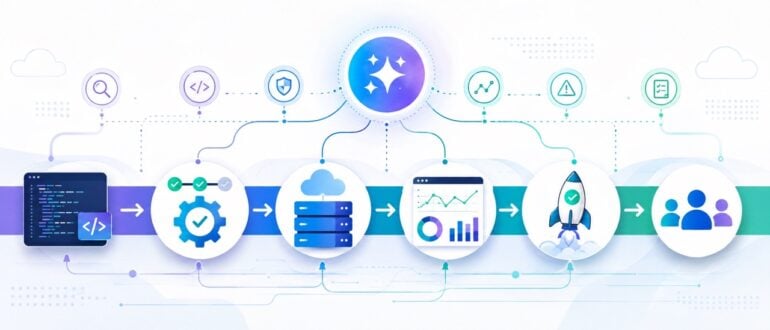
In 2026, artificial intelligence has transformed DevOps, giving rise to an "AI-Native DevOps" approach. This new paradigm goes beyond just automation, with AI becoming an integral part of software delivery. AI now assists in various stages, such as writing deployment pipelines, troubleshooting incidents, and analyzing data. This shift means traditional DevOps practices that followed predefined rules have evolved.
Instead of simply checking if code can build, if tests pass, and if quality gates are met, AI-powered systems now analyze past failures, flag risky changes, and recommend which pull requests require immediate attention. This shift allows teams to focus on the most critical aspects, rather than treating every code change equally.
In deployment processes, AI identifies patterns like past release trouble, service dependencies, infrastructure health, and prior incidents. This enables teams to make more informed decisions before releasing software live, rather than relying solely on set rules. Incident management also benefits from AI, as it can gather data from various tools, tie events together, and suggest likely causes for issues. While AI still requires human verification, its ability to expedite root problem identification is significant.
Observability tools have also evolved, with AI helping to identify patterns, connect events from different services, and filter out noise. This results in fewer pointless alerts, allowing teams to focus on critical issues only. Infrastructure as Code continues to be essential for managing cloud setups, but AI assists in keeping environments clean and secure by flagging security gaps, spotting inconsistent configurations, suggesting improvements, and even generating code templates.
AI agents are becoming increasingly common, capable of running entire workflows within safe limits. When there's a performance dip, for instance, an operations agent can spot the issue, gather diagnostics, check for similar past incidents, propose a fix, and request human approval. This represents a significant leap forward from traditional automation, which required explicit step-by-step programming.
However, the success of AI-Native DevOps heavily relies on trust, accountability, and data quality. Production systems demand reliable performance, and teams must understand the reasoning behind AI suggestions. Clear approval paths, audit trails, and tight permissions are crucial before any AI system can make operational decisions. Additionally, AI's effectiveness depends on high-quality data. Poor documentation, unreliable monitoring, and inaccurate incident labeling can hinder AI capabilities.
As DevOps engineers adapt to this new environment, their roles shift from performing routine tasks to reviewing AI output, setting guardrails, maintaining operational data quality, and making strategic decisions. While AI doesn't replace DevOps professionals, it enhances their capabilities and enables them to focus on more complex, high-level tasks.
Despite these advancements, DevOps specialists remain essential. Software delivery is complex, and unexpected issues often arise. Human expertise and judgment are indispensable in these situations. The shift towards AI-Native DevOps is not about replacing human DevOps professionals but rather transforming the field by incorporating intelligent systems that support and augment their work.
Ultimately, the most successful teams are those that effectively combine AI capabilities with strong engineering practices, clear guardrails, and human oversight. This partnership approach harnesses the strengths of both AI and human expertise, positioning teams for success in an ever-evolving software delivery landscape.
Written by urgent.news from DevOps.com's reporting — not their text. Machine-written — may contain errors; check the original before relying on it.