Sun-tanned cauliflowers and knobbly spuds - the heatwave veg that's good to eat
British shoppers should expect to see more wonky vegetables due to repeated heatwaves.
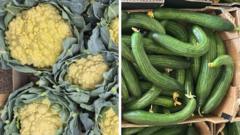
As the UK grapples with one of its driest and hottest growing seasons in decades, farmers are facing unprecedented challenges. Repeated heatwaves have resulted in predictions of the worst harvest since records began. The extreme heat not only impacts the quantity of produce but also its appearance. Retailers typically reject fruits and vegetables that don't meet strict guidelines on size, shape, and color.
However, with supplies under pressure, retailers are expected to relax these rules to avoid empty shelves. Consequently, shoppers may soon encounter smaller, wonkier, or oddly colored vegetables on the shelves.
Cauliflower is particularly affected by the hot weather due to its high water requirements. In hot conditions, the heads of cauliflower, usually shielded by leaves, receive more sunlight, turning them yellow. Oddbox, a subscription company selling surplus produce, acquired 6,000 cauliflower heads that were too dark for supermarkets.
The co-founder, Emilie Vanpoperingh, emphasized that the cosmetic defect is purely aesthetic, and the taste remains unaffected. She noted that Oddbox's supplies of these "sun-tanned" cauliflowers are expected to increase as retailers need to ensure constant availability of produce.
Cucumbers are spiraling out of shape as well, a result of the stress caused by overheated greenhouses. Farmers like John Harper, who grows pak choi for major supermarkets, have had to discard more produce due to pest infestations. The rise in flea beetles, which thrive in hot, dry conditions, has led to more holes in the produce. Even though some retailers have temporarily loosened their cosmetic rules, the majority of affected pak choi is still edible, though it may taste good for the beetles too.
Potato farmers face yet another challenge with the heat. The growth of root vegetables is stunted, resulting in oddly shaped tubers. When conditions cool down after a hot period, instead of growing a main tuber, farmers often see knobbly ends. Lucy Munns, a potato farmer, highlighted that this results in substantial wastage, as supermarkets and chip shops typically reject such produce.
However, Munns assured that these knobbly and misshapen potatoes are perfectly fine to eat, and the only difficulty lies in peeling them, which requires cutting off the knobbly section and peeling it separately.
Major supermarkets such as Sainsbury's, Tesco, Morrisons, and Waitrose already have dedicated lines for wonky vegetables. Waitrose's produce technical manager, Calum Kelly, explained that during demanding weather conditions, they relax size and shape guidelines for key vegetables to minimize waste and provide additional income to growers and farmers.
However, the situation is far from ideal, with Andrew Opie, the director of food and sustainability at the British Retail Consortium, stating that supermarkets are also importing more food from abroad to compensate for the UK's short supplies.
The British Retail Consortium predicts that this challenging period may extend into the autumn, with potential impacts on cherries and other crops. As British summers continue to become hotter and drier due to climate change, such heatwaves are becoming more frequent, hinting at a possible shift in British farming practices. Munns, the potato farmer, urged consumers to be a bit less picky about fresh produce and suggested trying imperfect vegetables in the supermarket aisles. She emphasized that in less fortunate countries, people don't have the luxury of choice.
Written by urgent.news from BBC News's reporting — not their text. Machine-written — may contain errors; check the original before relying on it.