Urgent.News

What's breaking now, across thousands of outlets.

Tech

Nvidia RTX Spark Geekbench scores just leaked — should Apple be worried about the fastest Windows laptops on the planet?

Newly revealed Geekbench scores reveal a powerful chip that should easily rival Apple and Intel offerings.
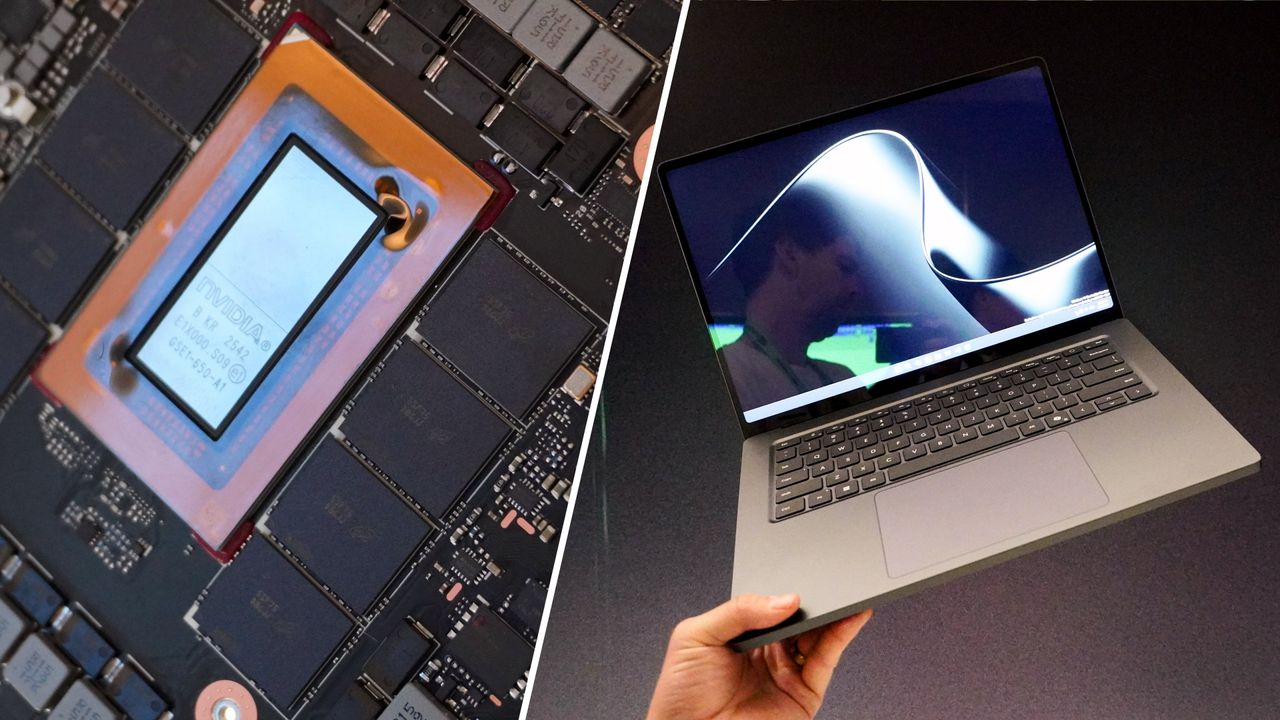
Nvidia RTX Spark Geekbench scores just leaked — should Apple be worried about the fastest Windows laptops on the planet?

Nvidia's ARM-based gaming laptops, powered by the RTX Spark, are set to launch soon, according to new Geekbench listings. These ARM-based CPUs were first unveiled at Computex in May by CEO Jensen Huang, who expressed a desire to reinvent the PC, focusing on an Arm-based design rather than the conventional x86 architecture. Nvidia already has experience in Arm-based gaming chips, having produced those for the Nintendo Switch 2.

Two Geekbench listings reveal scores for the RTX Spark N1X processor in 20-core and 18-core configurations. The 20-core configuration achieved a single-core score of 2,593 and a multi-core score of 23,424. This score compares favorably with Intel's i9-14900KS, which scored 23,785 in the same test. When compared to Apple's M5, the RTX Spark's multicore score is higher, while its single-core score lags behind.

Qualcomm's Snapdragon X2 Elite, with an 18-core configuration, scored 20,301 in Geekbench, surpassing the RTX Spark's multicore score. However, higher-end Qualcomm Snapdragon X2 Extreme chips have recorded over 25,000 in Geekbench scores. Despite these findings, the RTX Spark is expected to perform well against most chips on the market, particularly in multicore tasks.

Its single-core performance, though lower, may not be a significant issue for most users, as the RTX Spark platform will primarily benefit from its GPU supporting DLSS 4.5. The RTX Spark laptops are expected to arrive later this fall, running Windows 11, and will be compatible with most Windows games.

Written by urgent.news from Tom's Guide's reporting — not their text. Machine-written — may contain errors; check the original before relying on it.

Read the original at tomsguide.com →

More in Tech

China's semiconductor industry is rapidly catching up. There are three key factors behind its ultra-high-speed growth. China's semiconductor industry has achieved remarkable growth over the past decade, with its market size increasing from 65.4 billion yuan in 2012 to 359.9 billion yuan in 2021, at a compound annual growth rate of 17.5 percent. The growth rate far exceeds the global average of 7.4 percent during the same period. The domestic semiconductor industry has also made significant progress in technology development. In 2020, China's 28nm process technology, which is considered a mid-to-high-end level, reached mass production. The country's chip design sector has also seen rapid growth, with the number of design companies increasing from 542 in 2012 to 2,218 in 2021. China's semiconductor industry has grown rapidly due to three major factors. First, the Chinese government has provided strong policy support. Since 2014, China has launched a series of policies to support the development of the semiconductor industry. These include the "Made in China 2025" plan, the "Semiconductor Industry Development Plan (2014-2020)", and the "Special Fund for the Development of the Integrated Circuit Industry". These policies have provided significant financial support, with the total investment estimated to be over 300 billion yuan. Second, China has made significant investments in research and development. In 2020, China's semiconductor industry invested 17.5 billion yuan in research and development, accounting for 5.5 percent of its sales revenue. This is significantly higher than the global average of 2.5 percent. Third, China's semiconductor industry has a large and growing market. China is the world's largest consumer of semiconductors, accounting for over 30 percent of global demand. This has provided a huge market for domestic semiconductor companies to grow and develop. China's rapid growth in the semiconductor industry has significant implications for the global industry. It is expected that China's semiconductor market will continue to grow rapidly, driven by the increasing demand for chips in 5G, artificial intelligence, and other emerging technologies. However, the industry also faces challenges, including a shortage of talent and a lack of core technologies. Despite these challenges, China's semiconductor industry is expected to continue to grow rapidly, driven by strong policy support, significant investments in research and development, and a large and growing market.

More from Tuesday 11 August →