NVIDIA RTX 5070 PCIe Power Cable Melts After User Splits One 8-Pin Cable Into Two
In the world of DIY PC, it’s bad enough whenever we hear stories of 12VHPWR PCIe cables melting and burning, with the latter nearly taking an entire house down with it. Today’s cautionary tale, however, isn’t about using the provided cables: it’s about not taking a single 8-pin PCIe power cable and splitting it into […] The post NVIDIA RTX 5070 PCIe Power Cable Melts After User Splits One 8-Pin…
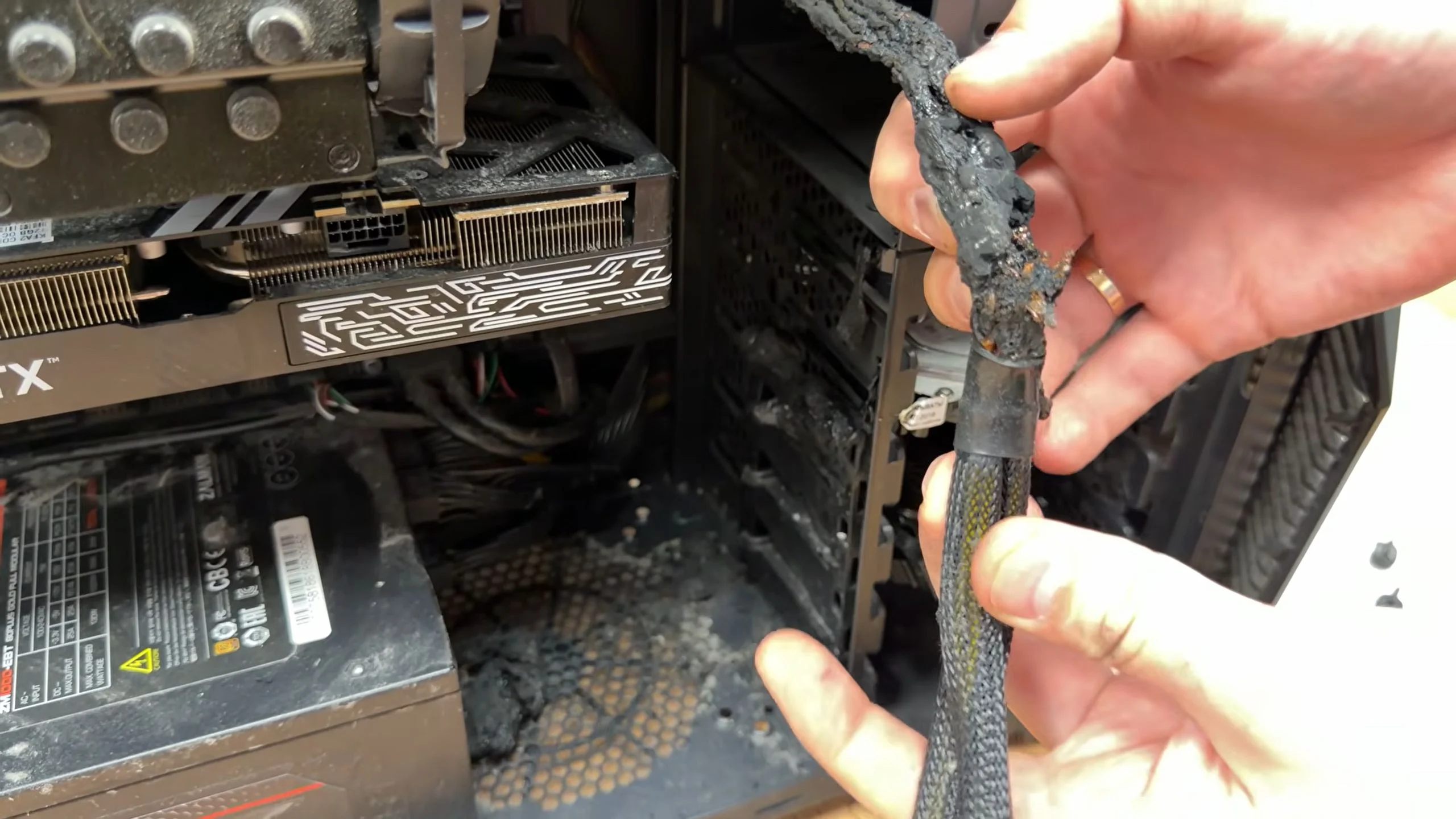
In the realm of custom PC building, cautionary tales involving 12VHPWR PCIe cables melting and causing catastrophic damage are not uncommon. However, this particular incident in Russia adds a unique twist: the user decided to split a single 8-pin PCIe power cable into two, rather than using the recommended two separate cables. The story unfolds on the YouTube channel of Russian TechTuber VIK-off, who documented the mishap involving an NVIDIA RTX 5070 graphics card and the resulting melted PCIe cable.
The RTX 5070 system was powered by a 12VHPWR adapter, with the dual 8-pin PCIe power headers on the other end. While the setup may seem ordinary at first glance, the real issue lay in how the dual 8-pin headers were connected. Utilizing a single, separate 8-pin PCIe power cable and splitting it into two headers was a recipe for disaster.
It's important to note that a single 8-pin PCIe connector is capable of delivering up to 150W of power, while a dual 8-pin connector can handle double that amount directly from the power supply unit (PSU). The 12VHPWR Gen 5 connector, introduced with the NVIDIA RTX 40 Series GPU in 2022, is designed to handle up to 600W in a single throughput, far exceeding the standard 8-pin connector.
Despite the RTX 5070 requiring up to 250W TGP, NVIDIA strongly advises using two separate 8-pin cables to power the card. This incident serves as a stark reminder that splitting a single 8-pin PCIe cable into two does not amplify power output, nor does it establish an additional power source. Instead, it places an excessive load on the cable, causing it to overheat and eventually melt.
In this particular case, the 12VHPWR end of the cable managed to survive the ordeal, and the RTX 5070 graphics card appeared undamaged. However, the lesson here is crystal clear: adhering to the manufacturer's guidelines and utilizing the recommended power solutions is paramount when building a custom PC.
Written by urgent.news from Lowyat.NET's reporting — not their text. Machine-written — may contain errors; check the original before relying on it.