New ropeways aim to save wildlife in Bangladesh’s fragmented habitats
As Bangladesh is rapidly being urbanized, more and more forests are getting fragmented, resulting in the construction of more roads, which means more wildlife are being killed in collisions with vehicles. To address these wildlife deaths, the Forest Department’s Tangail Divisional Office has recently facilitated a low-cost solution. At a total cost of 625,000 takas […]
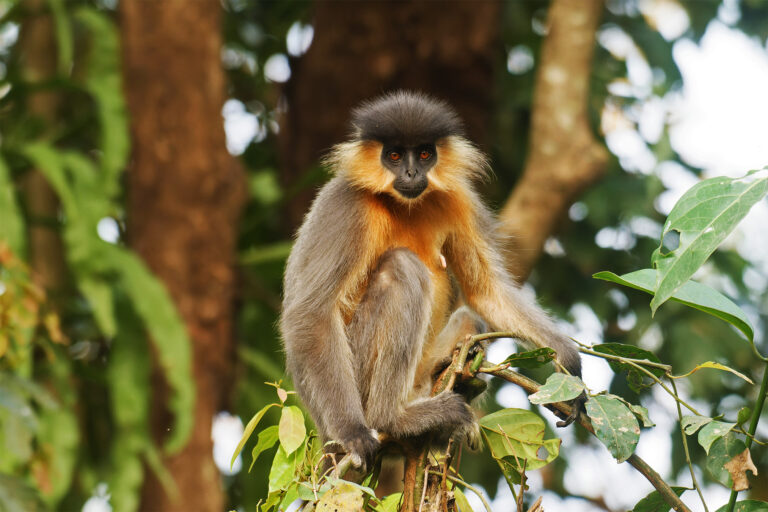
As Bangladesh urbanizes, forests become fragmented, leading to road construction and increased wildlife fatalities. The Forest Department's Tangail Divisional Office has taken a low-cost measure to combat this issue. At a total cost of 625,000 takas (approximately $5,000), five ropeway bridges have been erected along an 8-kilometer (5-mile) stretch of the Mymensingh-Tangail Highway N401.
This highway runs through Madhupur National Park, a reserve forest where heavy-duty vehicles frequently collide with wildlife, particularly primates. According to Abu Naser Mohsin Hossain, the Tangail divisional forest officer, these bridges aim to safeguard rhesus macaques, capped langurs, Indian civets, and small carnivores like fishing cats from roadkill.
The 8,436-hectare (20,845-acre) Madhupur National Park, the largest deciduous forest in Bangladesh, is home to 151 species belonging to 23 orders and 62 families. However, roadkill in the park goes undocumented as the Indigenous community consumes the carcasses shortly after accidents. Naser explained that the nylon-rope bridges offer safe aerial pathways for both nocturnal and diurnal arboreal animals. Each bridge is 30 meters (100 feet) long and nearly 1-meter (3-feet) wide.
Written by urgent.news from Mongabay's reporting — not their text. Machine-written — may contain errors; check the original before relying on it.