Monetary policy credibility: Is independence a necessary condition?
Some are insisting that the new governor must be independent, which usually gets defined, rather narrowly, as someone able to say no. It is worth asking whether that is really the binding condition.
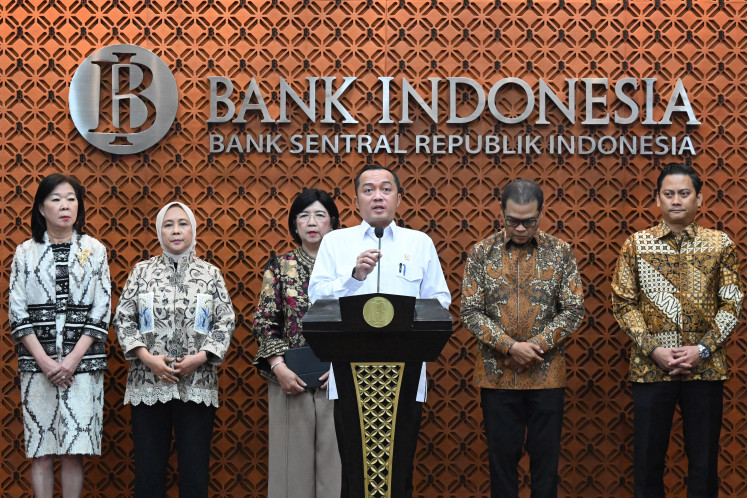
Recent events have called into question the credibility of the Bank Indonesia (BI) governor, reigniting debates on the necessity of independence in central bank leadership. Two factors have contributed to this uncertainty: evolving supervision and the sudden departure of the current governor. These developments have once again brought attention to the role of independence, as capital markets have faced upheaval, budget pressures have risen due to high oil prices, and policy coherence has been questioned by rating agencies.
Some analysts argue that independence is a crucial condition for a central bank to maintain credibility. However, the definition of independence often narrows down to an individual's ability to say "no." It is worth examining whether this is truly the defining factor. Singapore serves as an intriguing example of a central bank that is deemed very credible despite being chaired by the deputy prime minister and accountable to parliament.
The bank operates under operational rather than institutional independence, yet it still enjoys a premium borrowing rate similar to that of AAA-rated countries. This suggests that political oversight and personal standing can maintain credibility, as long as they are present, even without full institutional independence.
Written by urgent.news from The Jakarta Post's reporting — not their text. Machine-written — may contain errors; check the original before relying on it.