Incheon's 19-year quest to halt desertification slowly transforms Mongolia's steppes
Nearly two decades ago, residents of Incheon — an industrial port city on Korea’s west coast — were growing increasingly weary of the toxic yellow dust storms sweeping in each spring from the Gobi Desert. Rather than simply issuing air quality alerts, local civic groups decided to trace the transboundary pollution to its roots hundreds of miles away. In 2008, citizens raised 335 million won…
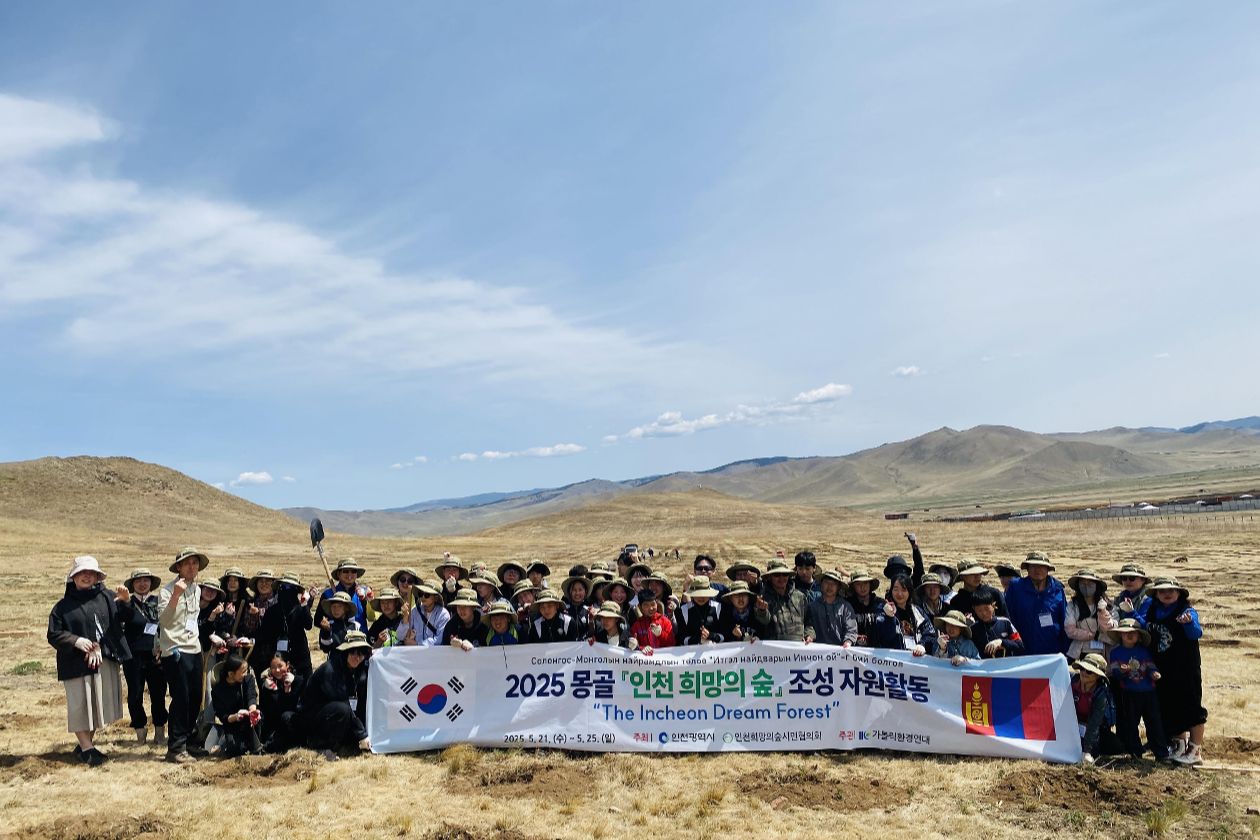
Nearly two decades ago, the residents of Incheon, a bustling port city in South Korea, began to notice the growing problem of dust storms originating from the Gobi Desert. Rather than merely issuing warnings, the local community took matters into their own hands. In 2008, they raised 335 million won (approximately $250,000) to plant trees in the devastated steppes of Mongolia. What started as a simple fundraising effort has grown into one of the most significant transnational environmental endeavors in East Asia.
The Incheon Forest of Hope initiative, as it is now known, has been a remarkable success story. Over the past 19 years, the project has converted 157 hectares of desolate land into a flourishing green belt, an area roughly the size of 220 soccer fields. This transformation has been achieved through the planting of over 250,000 drought-resistant trees, including Scots pine and Siberian larch, which have helped to stabilize the soil and reduce the frequency and intensity of dust storms.
The initiative has not only improved the local environment but has also gained recognition on the global stage. Incheon officials announced on Tuesday that the Incheon Forest of Hope will be showcased as a prime example of municipal climate action at the 17th Conference of the Parties to the United Nations Convention to Combat Desertification (UNCCD).
This prestigious recognition further underscores the impact and significance of this grassroots initiative, which has come a long way in its quest to combat desertification and protect the environment.
Written by urgent.news from The Korea Times's reporting — not their text. Machine-written — may contain errors; check the original before relying on it.
This story
This is one outlet's version. Read the fullest account.