Hydrogen-powered 1,600-hp car takes aim at multiple land-speed records on Bonneville Salt Flats this morning
The Hydromax is a 32-foot vehicle powered by two hydrogen engines adapted from JCB construction machinery. Together, they produce 1,600 horsepower. Rather than using hydrogen in a fuel cell to make electricity, the engines mix pressurized hydrogen gas with air and ignite it. Read Entire Article
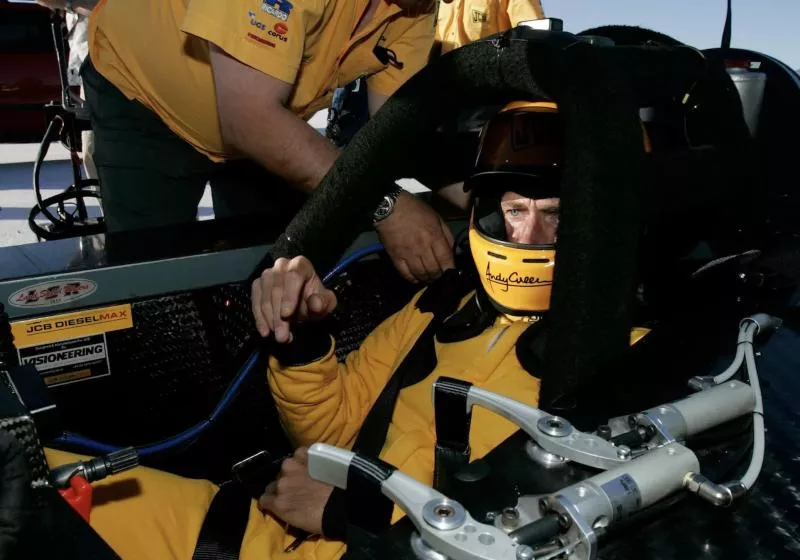
Andy Green, the British driver who holds the land-speed record for a diesel car, will attempt to break multiple records this Tuesday at Utah's Bonneville Salt Flats. Green will be driving JCB's Hydromax, a 32-foot vehicle powered by two hydrogen engines adapted from construction machinery. These engines produce a combined 1,600 horsepower and burn hydrogen gas mixed with air, rather than using a fuel cell to generate electricity.
Green previously set a diesel record of 350.092 mph at Bonneville 20 years ago, and he will be aiming to beat this mark as well as the current hydrogen internal-combustion record of 185.5 mph and the electric-vehicle record of 341.3 mph. However, the exact peak speed remains uncertain as the team is eager to discover the car's capabilities.
JCB has invested over $134 million in developing hydrogen engines for this project, which they claim produce no carbon dioxide from the tailpipe. This makes hydrogen combustion a potential solution for heavy-duty equipment, where batteries present challenges due to weight, charging, and operating demands. JCB's Chairman, Anthony Bamford, emphasizes the importance of hydrogen in reducing emissions, comparing it to the land-speed project as a way to prove its value.
While hydrogen's environmental benefits are clear when considering tailpipe emissions, the source of hydrogen production is a more complex issue. Currently, most hydrogen is made from fossil fuels, but JCB has signed a deal to use green hydrogen produced with renewable energy. The safety concerns surrounding hydrogen are significant, as it is stored under high pressure and highly flammable. Green and his team have taken extensive precautions and conducted months of testing to ensure the car's safe operation.
The land-speed run at Bonneville Salt Flats offers an ideal testing ground for this experimental technology. The flat, open course provides an extensive distance, but the salt surface has limited grip. To slow the car after the run, Green will deploy a parachute. The attempt is planned for shortly after sunrise, taking advantage of the cooler temperatures and the long straightaway at the site, which runs for about 10 miles and attracts spectators from about a quarter-mile away.
Written by urgent.news from TechSpot's reporting — not their text. Machine-written — may contain errors; check the original before relying on it.