FSSAI number on food packets explained: What each of the 14 digits means
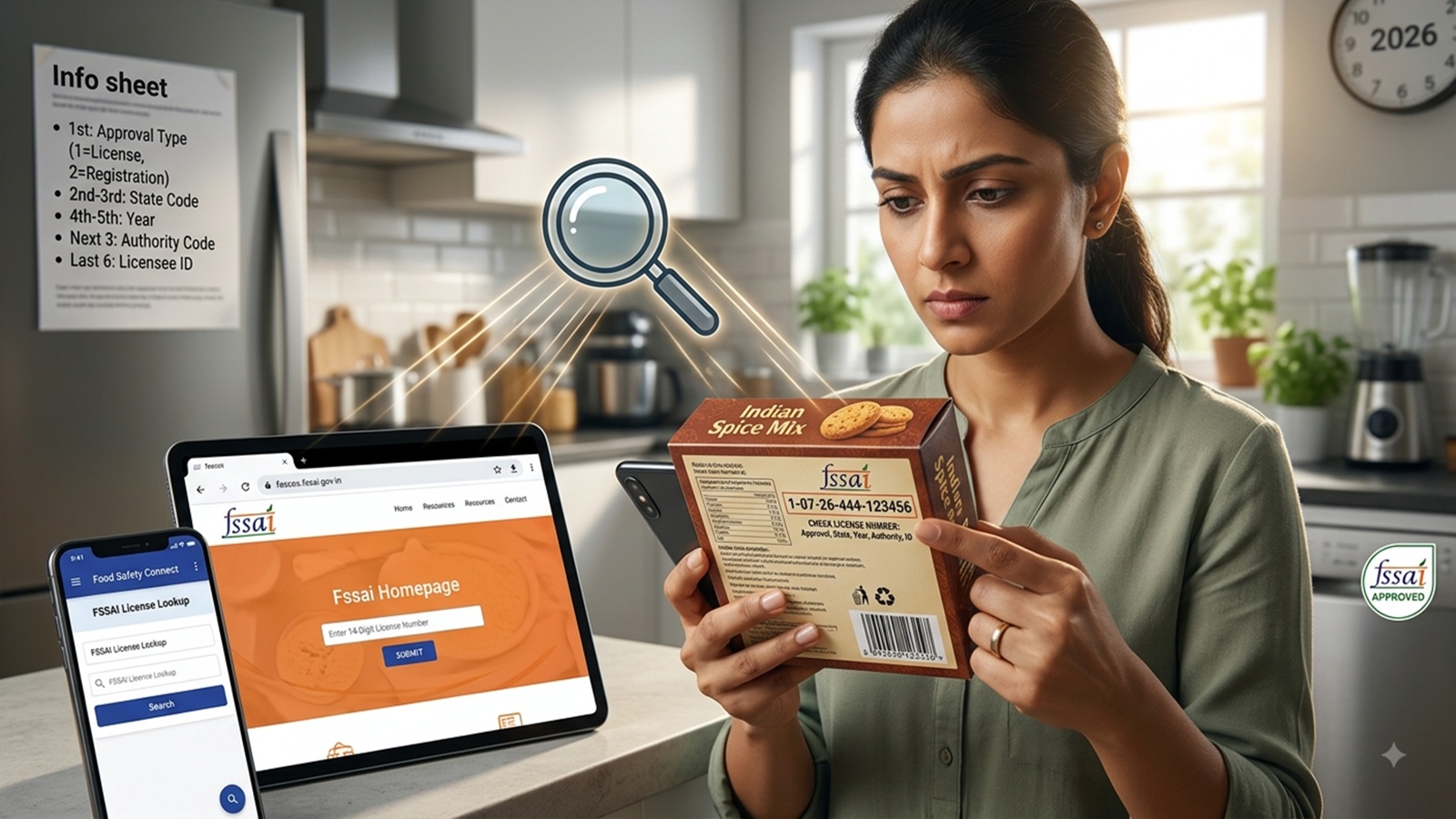
The Food Safety & Standards Authority of India (FSSAI), governed by the Ministry of Health & Family Welfare, assigns a unique 14-digit number to each food package, ensuring a quality check. This number comprises various parts that provide specific information about the food product.
According to FSSAI's recent post on X, the first digit indicates the approval type – '1' signifies a license and '2' denotes registration. The second and third digits represent the state or Union Territory code where the food business is located. Moving forward, the fourth and fifth digits reflect the year of issue, followed by three digits that denote the authority code. Finally, the last six digits constitute the unique licensee ID, identifying the specific food business operator responsible for the product.
Edwina Raj, Head of Services - Clinical Nutrition & Dietetics at Aster CMI Hospital in Bangalore, elaborates on the significance of this 14-digit FSSAI number. She advises consumers to routinely check this number alongside other crucial details on the food package, such as ingredients, nutrition information, expiry or use-by dates, and storage instructions. However, Raj emphasizes that the mere presence of an FSSAI number does not guarantee the healthiness or nutritional value of the product.
In instances where the FSSAI number is absent, consumers should exercise caution. Consuming food that lacks this crucial safety identification can potentially expose individuals to harmful bacteria, viruses, toxins, chemicals, or undeclared allergens, leading to food poisoning, stomach infections, vomiting, diarrhea, abdominal pain, and fever. These risks are particularly pronounced for vulnerable groups such as children, older adults, pregnant women, and those with compromised immune systems.
Raj clarifies that the lack of an FSSAI number itself doesn't conclusively prove food contamination but serves as a red flag. It signals the need to question the product's safety and opt for properly labeled alternatives. Importantly, Raj advises distinguishing between food safety and healthy eating. A product may possess a valid FSSAI number, yet still be laden with high levels of sugar, salt, unhealthy fats, or calories.
Therefore, it is essential to scrutinize the nutrition label and select foods that align with individual dietary requirements, avoiding products with damaged or tampered packaging, missing information, or suspiciously altered dates.
Written by urgent.news from The Indian Express - Lifestyle's reporting — not their text. Machine-written — may contain errors; check the original before relying on it.
This story
This is one outlet's version. Read the fullest account.
- FSSAI number on food packets explained: What each of the 14 digits means indianexpress.com