Fog Of War: A World Searching For An Exit
Amidst a fragile balance between peace and conflict, global powers navigate complex negotiations and military readiness in regions like the Strait of Hormuz and Yemen.
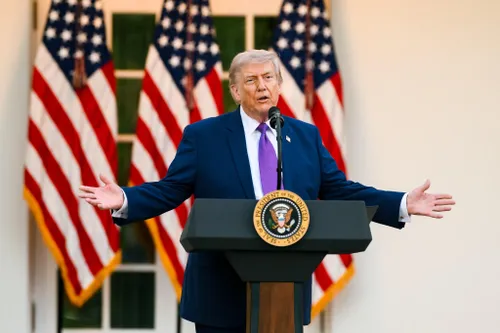
The world finds itself in a state of perpetual conflict and peace, with President Trump expressing optimism about resolving the Iran situation. Negotiations for shipping arrangements in the Strait of Hormuz are underway, but Iran's conditions remain significant, leaving diplomats searching for an exit while military forces remain vigilant.
The situation in Yemen is tense, with Iran-aligned Houthi forces capable of threatening Saudi interests and international shipping routes. Diplomacy and military preparations coexist, as political leaders advocate for peace while military planners prepare for potential failure.
America's military power is unparalleled, but even a strong military cannot indefinitely consume advanced weapons without considering production times, supply chains, industrial capacity, and cost. Modern warfare demands understanding when diplomacy is more advantageous than military action.
NATO's eastern flank nations worry about Russia testing alliance limits through ambiguous actions such as drone incidents, cyberattacks, infrastructure sabotage, false-flag operations, or limited provocations. History shows that wars can start unintentionally when each side assumes the other will retreat.
Russia's conflict extends beyond Europe, with Ukraine's President Volodymyr Zelensky suggesting North Korea might deploy up to 50,000 troops to Russia, potentially strengthening the military relationship between two nuclear-armed states. South Africa's relationship with Washington is strained due to disagreements over trade, foreign policy, and the Expropriation Act, which critics argue threatens property rights and investment.
The United States has imposed a 12.5% tariff on certain South African exports due to concerns about forced labor. South Africa remains open to negotiating with the US, but must navigate the challenge of maintaining its sovereignty and identity while engaging with competing global powers.
America should avoid forcing countries to choose between Washington and its adversaries, while South Africa should acknowledge that genuine friendship requires candid discussions when interests and values diverge. Diplomacy is essential when friends disagree.
Economic desperation, political instability, and misinformation can undermine borders, as demonstrated by events in Ceuta, Spain. Nations have both the right and responsibility to control their borders, but security and human dignity must not be opposing principles.
Armed groups in Colombia have started using weaponized civilian drones, highlighting the democratization of warfare. Technology from one battlefield can become a threat in others, whether as terrorist tools, cartel weapons, or homeland-security risks.
Venezuela demonstrates that political change doesn't always require warfare. Opposition leaders demand restored democratic institutions, political freedoms, and credible elections. Dialogue is necessary, but without genuine political competition, it's insufficient. Ultimately, democracy hinges on a simple principle: genuine political competition is essential.
The international order is being tested from multiple fronts, including Iran, Yemen, Russia, South Africa, Europe, Colombia, and Venezuela. Alliances are under pressure, military inventories strained, and drones are changing warfare. Trade disputes increasingly serve as geopolitical weapons. While progress may be announced, peace and tranquility are not guaranteed. However, cynicism should not be the basis for foreign policy.
Written by urgent.news from IOL's reporting — not their text. Machine-written — may contain errors; check the original before relying on it.