Experts warn population policies lag behind demographic realities
ISLAMABAD: With Pakistan’s population having crossed 240 million and a median age of just 19, policymakers, health experts and researchers warned that the country’s demographic trajectory demands an urgent shift from short-term fixes to robust, evidence-based strategies. The stakeholders were speaking at the Sustainable Development Policy Institute (SDPI) seminar titled “Population Growth and…
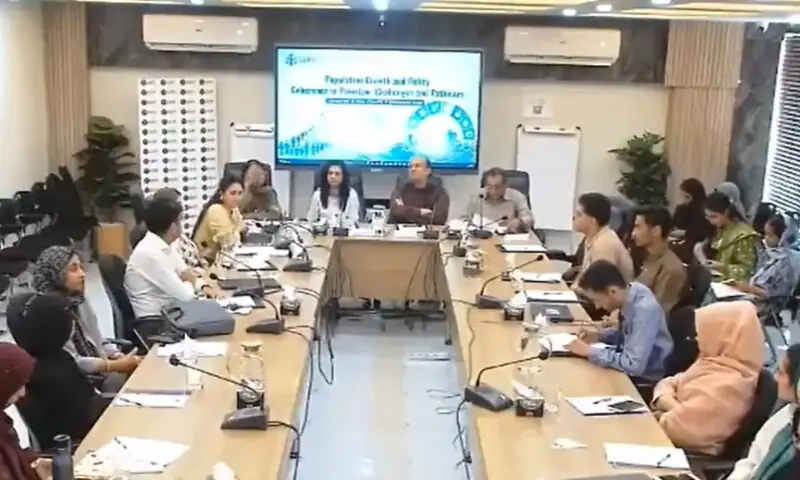
ISLAMABAD—As Pakistan's population has surged past 240 million with a median age of just 19, leading experts warned that the nation's demographic trajectory demands a swift transition from temporary solutions to comprehensive, data-driven strategies. On Monday, stakeholders gathered for the Sustainable Development Policy Institute's (SDPI) seminar titled "Population Growth and Policy Coherence in Pakistan: Challenges and Pathways," which delved into institutional silos, regional implementation obstacles, and community narratives influencing the country's population policy terrain.
The keynote address was delivered by Prof Dr Shezad Ali Khan, Executive Director of the Health Services Academy, while Rabia Zafar of the National Institute of Population Studies and Farah Ashraf of the United Nations Population Fund participated in the panel discussion.
Dr. Khan presented alarming statistics, revealing that approximately 48% of pregnancies in Pakistan are unintended, resulting in roughly 380,000 unsafe abortions annually. These unsafe procedures, often conducted in unregulated clinics, lead to severe complications and sepsis. Pakistan also experiences around 700,000 stillbirths each year, the highest number globally, with a 42% neonatal mortality rate, the highest since 1960.
Dr. Khan emphasized that 20 out of every 100 couples face unmet family planning needs due to resource shortages rather than community resistance, indicating that population issues stem from systemic failures rather than individual shortcomings. He cautioned against adopting externally-driven terminology that could provoke cultural resistance, advocating for an "indigenized" narrative centered around "population welfare," particularly focusing on maternal nutritional recovery and breastfeeding, which is practiced by only 33% of mothers.
Dr. Khan stressed the critical need for a multi-sectoral approach, including education and economic planning, alongside healthcare. He highlighted the importance of infants not being breastfed, which increases their risk of death from diarrhoea by 11 times and pneumonia by five times, underscoring the necessity of a comprehensive strategy.
Rabia Zafar pointed out structural deficits in long-term financing, regional coordination, and ground-level commitment, urging policymakers to shift from reactive planning to systematic, projection-based frameworks. Farah Ashraf stressed the urgent need to break down fragmented departmental silos to facilitate coherent policymaking, noting that UNFPA-backed initiatives require unified data governance, harmonized coordination between federal and provincial stakeholders, and alignment of national budgets with long-term demographic trends.
Deputy Executive Director (Policy) at SDPI, Dr. Shafqat Munir, highlighted that Pakistan's 57 million women in their reproductive age could exceed 100 million by 2050, while the working-age population, currently bolstered by a youth cohort comprising 67% of the population, is projected to grow from 164 million to 292 million over the same period.
He emphasized that Pakistan's core challenge lies not in a shortage of policy statements but in inadequate long-term financing, uneven regional access, and weak inter-departmental coordination. Dr. Munir closed the discussion by reiterating SDPI's commitment to evidence-based, multi-sectoral dialogue that bridges research and actionable governance, urging participants to move from dialogue to implementation.
He stated that the seminar is part of SDPI's ongoing research agenda on demographic and development policy in Pakistan.
Written by urgent.news from Dawn - Pakistan's reporting — not their text. Machine-written — may contain errors; check the original before relying on it.