Europa's Interior Ocean Could be Harder to Reach Than We Thought
Lujendra Ojha, a planetary scientist, led a study suggesting that Europa’s icy shell may be a stronger barrier between the moon’s hidden ocean and its surface than previously thought.
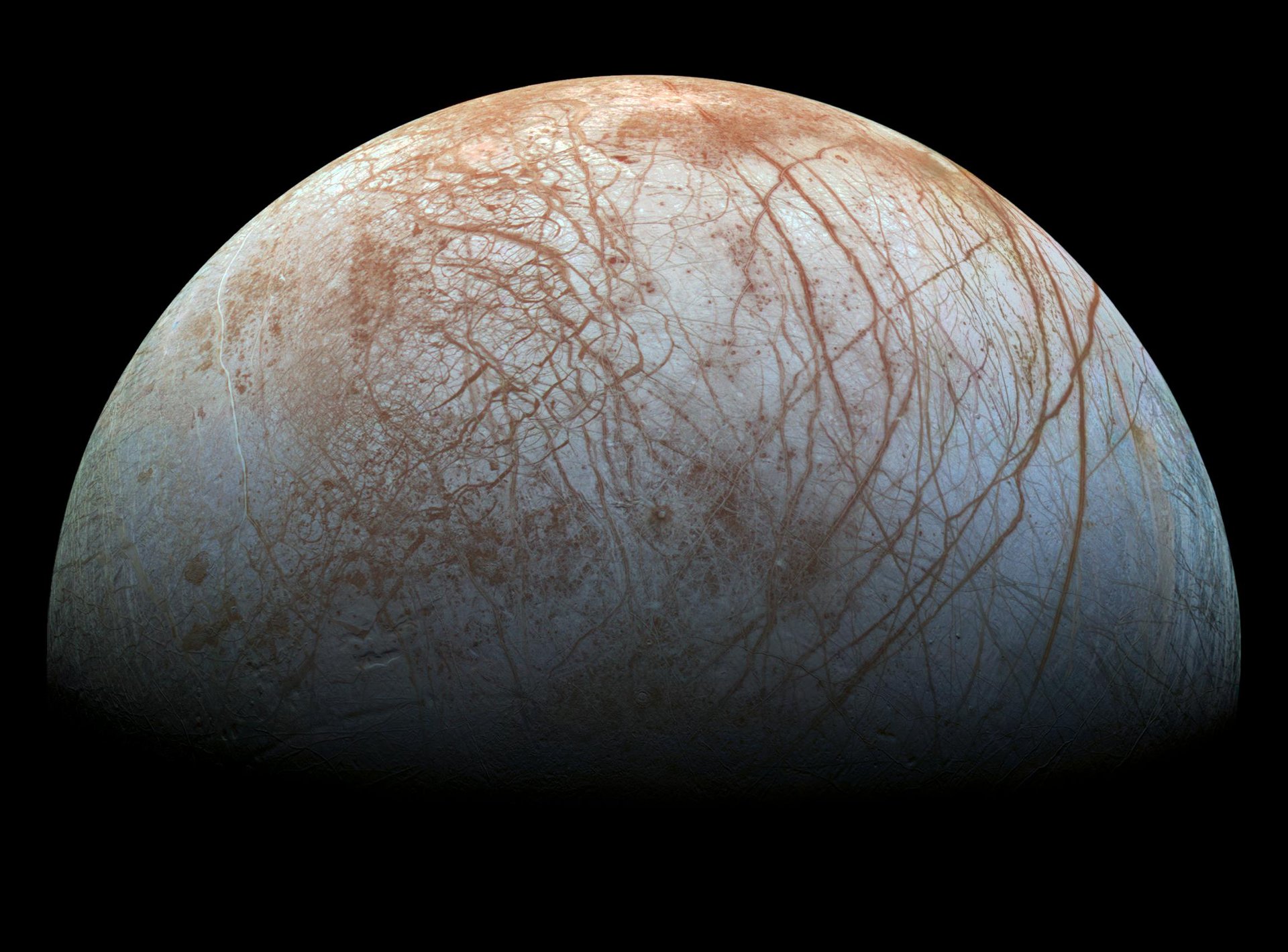
Scientists from Rutgers University have discovered that accessing Europa's interior ocean may be more challenging than initially believed. The icy moon of Jupiter, known for hosting an ocean deep within its structure, has long captivated researchers due to its potential to support life. Two upcoming missions, the ESA's Jupiter Icy Moons Explorer (JUICE) and NASA's Europa Clipper, aim to investigate Europa's surface to determine if its ocean could harbor life.
However, the latest study led by Lujendra Ojha suggests that reaching the ocean might be far more difficult than previously thought. The team utilized computer simulations to explore the possibility of liquid water from Europa's interior ocean rising through cracks in the surface ice and collecting in shallow reservoirs near the surface.
Their findings indicate that the journey from the deep ocean to the surface ice is likely far more turbulent and complex than previously assumed. Narrow cracks, which are more likely to allow water to rise, could freeze within hours due to the cooling and formation of ice crystals. While wider cracks may carry more water toward the surface, turbulence prevents such scenarios from being as probable.
The study suggests that Europa's crust would need to be exceptionally long or abundant for sufficient water to reach subsurface reservoirs. If such reservoirs exist, they might have formed locally due to ice melting within the crust rather than rising from the ocean. Ojha and his colleagues concluded that if shallow reservoirs are present, they may not contain water from Europa's ocean and may have formed due to localized heating and melting.
These findings have significant implications for future exploration of Europa, including the planned JUICE and Europa Clipper missions. The data gathered by these missions will help determine the structure of the icy crust and the existence and composition of any shallow reservoirs, providing crucial insights into the potential for habitability on this fascinating celestial body.
Written by urgent.news from Universe Today's reporting — not their text. Machine-written — may contain errors; check the original before relying on it.