Energie: Wirtschaftsministerium: Kohleausstiegs-Bericht kommt später
Deutschland will weg von klimaschädlicher Kohle und hin zu Energie aus Wind und Sonne. Lücken sollen Gaskraftwerke schließen. Weil deren Planung dauert, verzögert sich ein wichtiger Bericht.
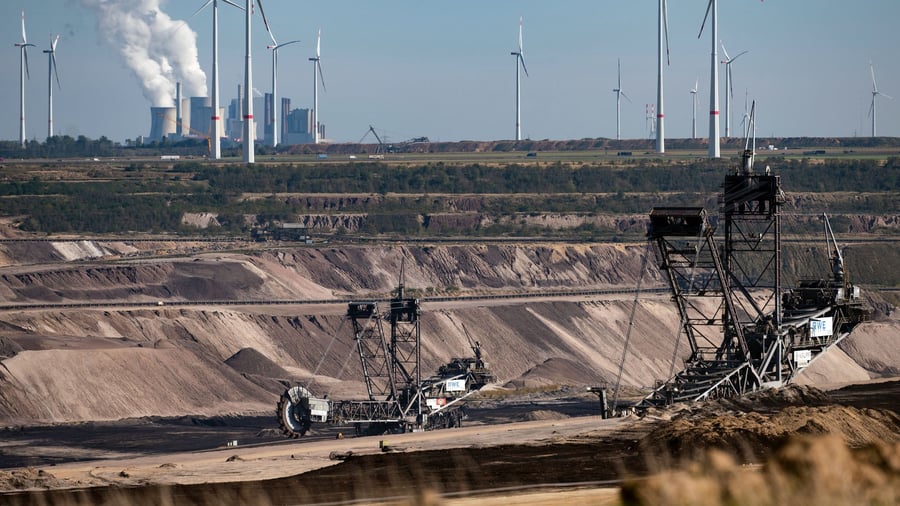
The German Federal Ministry of Economy has released a report on the planned coal phase-out in North Rhine-Westphalia, but it was not delivered on time. The Ministry explained that the report's preparation will require additional time. The report was originally scheduled for August 15th, but the delay has been reported by local media outlets such as the Rheinische Post, Spiegel, and Welt.
The Ministry stated that the report will be presented "as quickly as possible after completing the planned analyses." The Ministry justified the delay by citing upcoming tenders for electricity generation capacities, which should be taken into account in the report. These new capacities are expected to amount to 11 gigawatts and be operational by the end of 2031.
They will primarily burn natural gas, emitting harmful climate gases, but should be climate-neutral by 2045 using hydrogen. The new plants will ensure electricity supply despite the coal phase-out and support the expansion of renewable energy. The Ministry emphasized its intention to wait for the results of this year's tender rounds to ensure a realistic and reliable analysis, particularly regarding supply security from 2031 onwards.
The Federal Ministry for Economic Affairs and Energy will release the report as soon as possible after completing the analyses. North Rhine-Westphalia is expected to phase out lignite mining by 2030, eight years ahead of the original deadline. This was agreed upon in 2022 between the German and state governments, including Green politicians, after RWE.
By 2038, Germany aims to phase out coal power entirely. The SPD criticizes the "chaotic coal phase-out", stating that it is a continuation of the "chaotic coal phase-out deal between Mona Neubaur and Robert Habeck" who were both Economics Ministers in North Rhine-Westphalia and at the federal level in 2022. The SPD leader in North Rhine-Westphalia, Jochen Ott, called for planning security and clarity regarding the timeframe and reserve quantities needed.
Currently, it remains unclear what costs a reserve operation of the power plants would entail. The CDU economic council in North Rhine-Westphalia also criticized the 2022 agreement for the premature phase-out of lignite mining, finding it increasingly ambitious. The CDU council also expressed concern about the costs of maintaining reserve operations, which would need to be refinanced and burden companies and private households through network charges.
Written by urgent.news from Handelsblatt's reporting — not their text. Machine-written — may contain errors; check the original before relying on it.