Draft urban law poised to reform infrastructure financing, TOD in megacities
The National Assembly is currently debating the draft Law on Urban Development, which aims to unlock institutional bottlenecks and empower megacities through transit-oriented development and modern financial mechanisms.
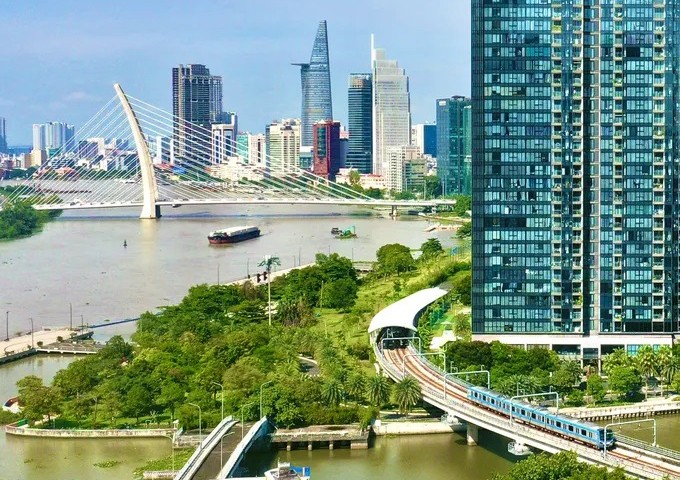
The National Assembly is presently discussing the draft Law on Urban Development, which aims to remove barriers for megacities by promoting transit-oriented development and innovative financial methods. Today, on August 11, the 16th National Assembly commenced a plenary session to deliberate the draft Law on Urban Development, following group discussions the previous day. Minister of Justice Hoang Thanh Tung is scheduled to provide an explanatory speech to address concerns raised by National Assembly deputies.
The draft Law on Urban Development is expected to create development opportunities for major urban centers, including Ho Chi Minh City (HCMC). While the draft isn't a conventional urban planning, construction, or administration statute, the most significant challenge for HCMC is urban financing. Despite HCMC's ability to issue local government bonds, borrow from domestic financial institutions, and leverage foreign loans through Government bonds, the outstanding debt limit remains constrained.
The Law's core issue is that simply permitting borrowing doesn't establish a modern urban financial ecosystem. Building a metro line, for example, requires billions in initial investment but delivers economic returns over decades by reducing travel times, expanding urban space, and increasing property values.
Transit-oriented development (TOD) mechanisms are crucially important, as they allow authorities to capture a share of the increased land value generated by public investment. This creates a beneficial cycle where infrastructure generates land value, generating revenue to finance new projects. The draft Law on Urban Development aims to expand legal provisions to utilize underground and elevated spaces in TOD zones.
Rather than focusing on whether the budget can cover the initial costs, the city can structure a 50-year value stream as capital today, reflecting modern urban finance.
HCMC requires a robust capital market based on project cash flows, instead of relying heavily on state budgets and bank credit. Urban infrastructure is a unique asset class, with metro lines lasting for decades and water or energy projects generating stable cash flows over extended periods. To attract investors, HCMC must deploy suitable financial instruments, such as specialized bonds tied to specific infrastructure clusters with transparent repayment structures.
This would enable urban funds to utilize state capital as seed money before attracting international private finance. However, these projects must ensure efficiency and meet stringent criteria, backed by a flexible mechanism allowing the city to confidently commit to delivering these projects.
The impact of the Law on Urban Development would be significant if HCMC gains broader autonomy to design TODs, exploit urban space, and reorganize functional zones. It could potentially give rise to a new urban economic model, especially as HCMC evolves into a diverse economic space, including an international financial center, industrial park, seaport-logistics hub, and innovation hub.
HCMC should transition from a mindset focused on selling urban assets to earning money to transforming a portion of the city's future cash flows into today's investment capital. This shift highlights the importance of self-determination in urban development, as planning is a powerful tool for distributing economic value.
Written by urgent.news from SGGP English Edition's reporting — not their text. Machine-written — may contain errors; check the original before relying on it.