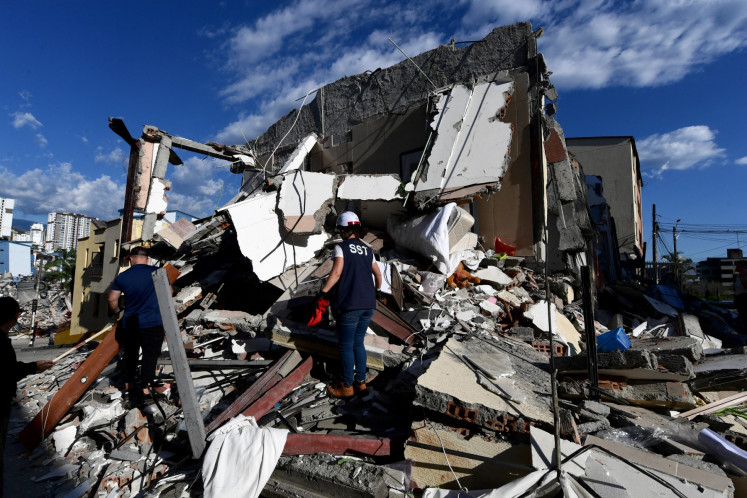
Colombia earthquake has killed at least 132. My research helps explain why it was so destructive
Many buildings in Colombia have thin concrete walls, which makes them extremely vulnerable to collapse.
A powerful earthquake with a magnitude of 7.4 recently struck Colombia near San José del Palmar in Chocó, resulting in at least 132 deaths and significant damage to homes and buildings in cities including Cali, Manizales, and Pereira. The earthquake occurred due to strike-slip faulting at a depth of around 110 kilometers. While it's too early to determine any connection to a recent earthquake in Venezuela, the event has highlighted the structural weaknesses in Colombian buildings, particularly those built using standard construction practices.
These buildings often have thin concrete walls (7-10 cm thick) with minimal steel reinforcement (7-10 cm) and incomplete confinement measures, making them highly susceptible to failure during seismic activity. Research conducted by the author on reinforced concrete structures in Colombia supports this conclusion, demonstrating that even with adequate steel reinforcement, the thin walls are still prone to collapse under significant ground shaking.
This design flaw is not unique to Colombia, as similar practices are observed in other Latin American countries and even in Australia before recent revisions to building standards. The author emphasizes the need for improved building practices and adherence to more resilient design principles to mitigate the devastating impact of earthquakes on vulnerable infrastructure.
Written by urgent.news from The Conversation AU's reporting — not their text. Machine-written — may contain errors; check the original before relying on it.