Cattedrale di San Nicolò in Noto, Italy
The Late Baroque towns of the Val di Noto are a UNESCO World heritage site made up of eight towns in southeastern Sicily. Rebuilt in a style unique to the island after the devastating earthquake of 1693, an estimated 7.4 on the magnitude scale, causing around 60,000 casualties. Many towns in southeastern Sicily were completely razed, including the medieval town of Noto, with half of its residents…
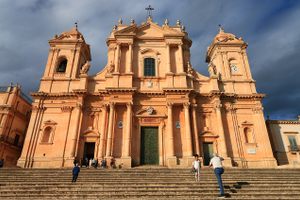
The Late Baroque towns of Val di Noto, located in southeastern Sicily, have been designated a UNESCO World Heritage Site. These towns were rebuilt following a catastrophic earthquake of magnitude 7.4 in 1693, which resulted in approximately 60,000 fatalities and the destruction of many towns, including the medieval Noto. To address the aftermath, Noto was relocated about 10km south of its original site, constructed on flatter terrain, and designed with wider, more aesthetically pleasing, and safer streets to prevent the domino effect observed in the old town during the disaster.
Construction of the Cattedrale di San Nicolò in New Noto commenced in the early 18th century and was completed in 1776. The cathedral was dedicated to St. Nicholas, the bishop of Myra. Visitors are greeted with a grand staircase leading to the cathedral's imposing bronze door, marking the beginning of a journey through its rich history.
The cathedral's original opulent interior was lost when the dome and roof partially collapsed in 1996, due to structural damage from an earthquake in 1990 and inadequate repairs from prior renovations.
In 2007, the dome was reconstructed, and the cathedral's interior was repainted predominantly white. This stark transformation, though seemingly plain, still displays Baroque details, including the lectern and cherub-adorned chancel, which echo the grandeur of the cathedral's exterior. The town is celebrated as the epicenter of Sicilian Baroque architecture, with the Cattedrale di San Nicolò serving as a quintessential example of the final flourish of the Baroque style in Europe.
The town is enveloped in a warm, golden glow, primarily due to the pale yellow sandstone employed during its initial construction, with the cathedral's centerpiece magnifying this enchanting effect.
Written by urgent.news from Atlas Obscura's reporting — not their text. Machine-written — may contain errors; check the original before relying on it.