Can the SCO become a more influential force globally?
Despite representing nearly half the world’s population, accounting for about a quarter of the world’s gross domestic product and covering more than 60 per cent of the Eurasian land mass, the role of the Shanghai Cooperation Organisation in the international arena remains relatively limited. While the SCO has long been a priority in China’s neighbourhood diplomacy, the grouping also serves as a…
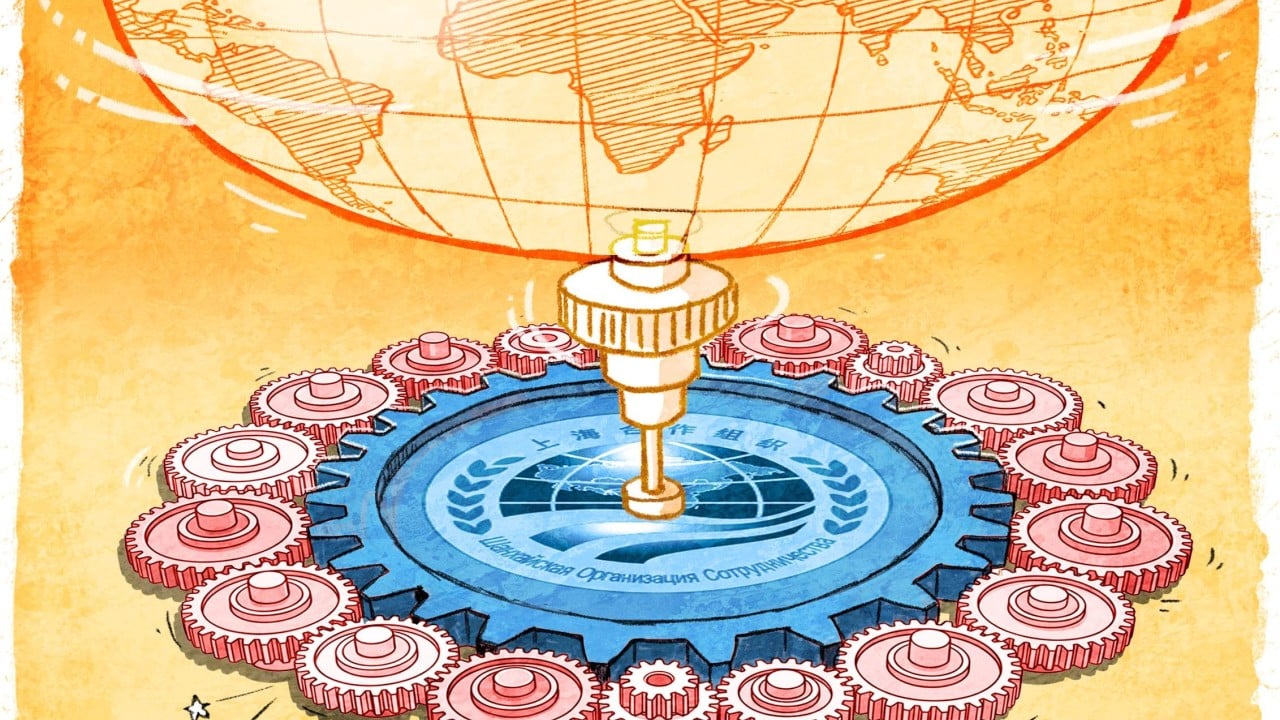
The Shanghai Cooperation Organisation (SCO) represents nearly half of the world's population, a quarter of the global GDP, and over 60% of the Eurasian landmass. Despite its immense potential, the SCO's influence on the international stage remains limited. Amidst China's neighbourhood diplomacy efforts, the SCO serves as a platform for member states to pursue their own foreign policy goals.
In preparation for the upcoming SCO leaders' summit in Bishkek, the foreign ministers of SCO's 10 members met in Cholpon-Ata to adopt a joint statement. While the members share positions on regional and international issues, their views on critical geopolitical questions often differ. Tensions between India and Pakistan frequently block consensus within the organisation, with India reportedly blocking Azerbaijan's SCO membership bid last year and Pakistan and Belarus thwarting Armenia's efforts.
The decision-making process within the SCO, which requires consensus, poses a significant challenge. With 10 Eurasian actors having diverse geopolitical goals, reaching agreement can be difficult. Kazakhstan proposed reforms to make the SCO a more effective multilateral cooperation mechanism, while the foreign ministers are calling for improved working mechanisms to make decision-making more efficient.
The US-Iran war, an SCO member, presents a significant challenge for the organisation. Iran's readiness to share defensive military capabilities with SCO members, particularly China and Russia, remains uncertain due to its close ties with the US and Central Asian states seeking stronger ties with Washington. While Iran may find limited support for an anti-US policy within the SCO, China and Russia are expected to collaborate to promote the SCO's development and strengthen its international standing.
Achieving the SCO's potential to contribute to global stability and boost its influence will require addressing several key obstacles, including internal divisions, India-China rivalry, India-Pakistan tensions, limited financial integration, and relatively weak security cooperation. To move beyond symbolic declarations and strengthen practical cooperation, the SCO members must find ways to manage internal disagreements.
The Bishkek summit is expected to discuss these issues and set the stage for concrete steps to strengthen the organisation.
Written by urgent.news from South China Morning Post's reporting — not their text. Machine-written — may contain errors; check the original before relying on it.