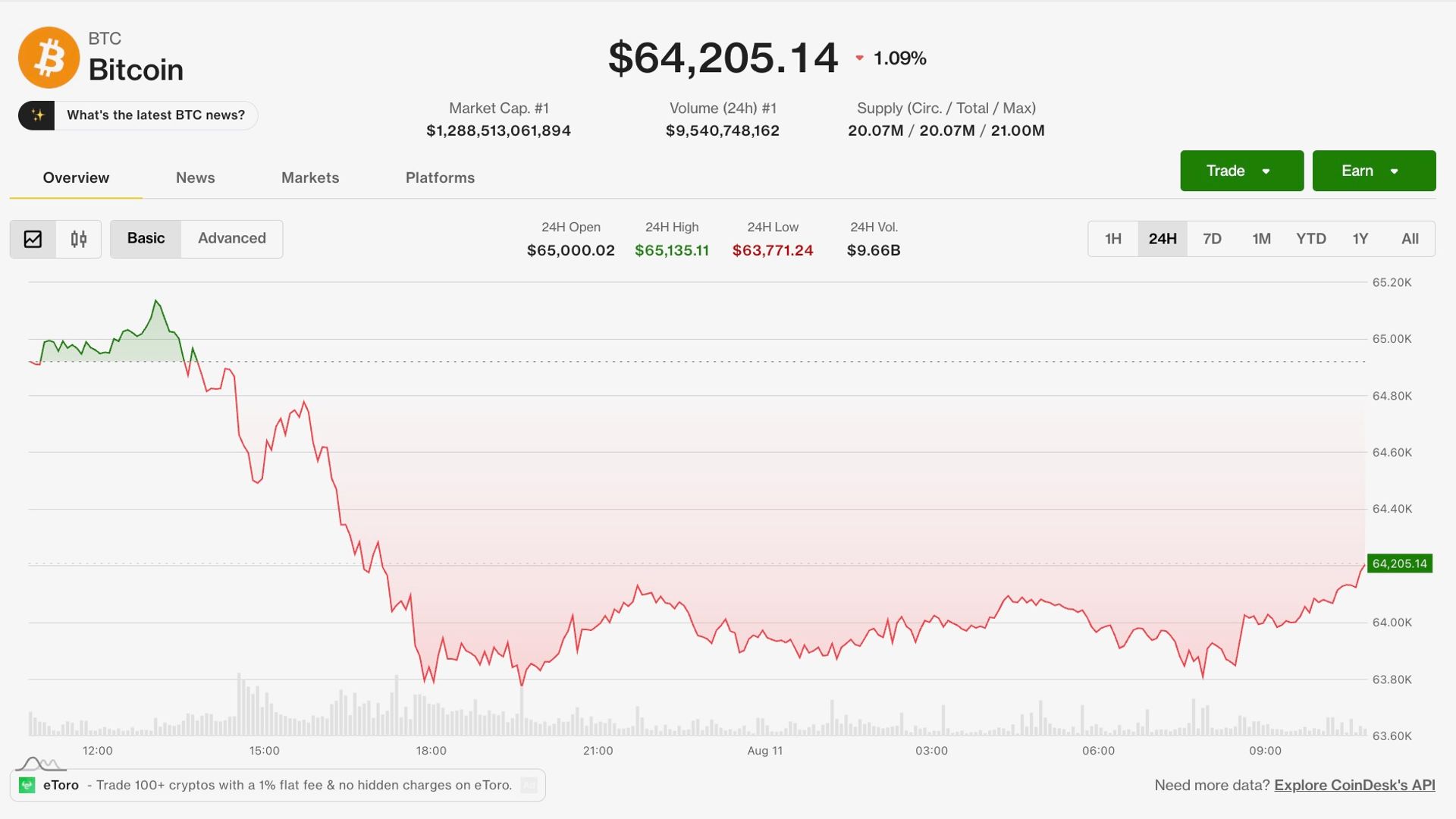
Bitcoin stuck below $65,000 as Hormuz hopes evaporate, XRP close to dropping below $1
The Strait of Hormuz relief trade unraveled after Trump demanded 50 years of Iranian compensation, pushing oil back to $89 and leaving crypto and equities unchanged ahead of a pivotal CPI report.
WTI oil prices reached a new high of $83.50 per barrel on Tuesday, signaling a 10% increase from last week's closing prices. This surge is attributed to dwindling hopes of a peace deal between the US and Iran, as tensions in the Middle East continue to escalate. The US and Iran have been unable to agree on reopening the Strait of Hormuz, with reciprocal demands for compensation for war damages stalling any progress towards a lasting peace agreement.
Tehran has reshuffled its military leadership, appointing six new senior officials, including Mohsen Rezaee as Secretary of the Supreme National Security Council, who holds a pessimistic outlook on negotiations with the US. Meanwhile, the passage of oil through the Strait of Hormuz has been severely limited, with only six vessels passing through on Monday, far below the usual 10-11 vessels and a fraction of the 130-160 vessels that typically traverse the channel before the war erupted in February.
WTI oil is a high-quality crude oil predominantly sourced in the United States and traded internationally. Its price is subject to fluctuations influenced by global economic growth, political instability, conflicts, sanctions, and decisions made by OPEC, a coalition of major oil-producing nations. The value of the US dollar also plays a significant role, as oil is primarily traded in US dollars, making it more affordable when the dollar weakens.
Oil inventories reported by the American Petroleum Institute (API) and the Energy Information Agency (EIA) further impact WTI prices, with decreasing inventories signaling increased demand and pushing up prices, while higher inventories indicate a surplus and lead to lower prices. OPEC's decisions to adjust production quotas can also sway WTI oil prices, with quota reductions tightening supply and driving prices up, while increased production has the opposite effect.
Written by urgent.news from FXStreet's reporting — not their text. Machine-written — may contain errors; check the original before relying on it.
This story
This is one outlet's version. Read the fullest account.
- WTI Oil hits fresh highs at $83.50 as Hormuz reopening hopes vanish fxstreet.com
- China’s stocks mixed, Hong Kong slips as Hormuz reopening hopes fade freemalaysiatoday.com