Anthropic pledges to watermark AI content in EU
Models launched on or after 2 August will support machine-readable content marking. Read more: Anthropic pledges to watermark AI content in EU
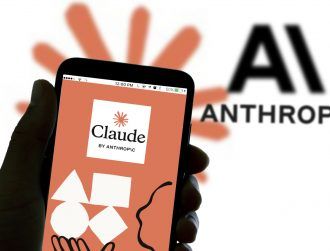
Anthropic, the creator of the Claude AI model, has announced plans to watermark AI-generated content in the European Union, starting from models launched on or after August 2nd. This move comes as the EU's landmark AI legislation, known as the AI Act, takes effect, imposing stricter transparency rules on AI systems. These rules mandate that certain AI systems inform users when they are interacting with AI and how the content they consume is generated or altered by it.
Anthropic is among around 200 companies that have signed the Code of Practice on Transparency of AI-Generated Content, a voluntary tool designed to aid businesses in adhering to the stringent AI regulations. Other major AI providers, such as OpenAI, Mistral, Meta, and Microsoft, are also involved in this initiative. The watermarks that Anthropic is implementing are machine-readable content markings, which will appear as digitally signed provenance metadata, such as embedded watermarks in text, adhering to Coalition for Content Provenance and Authenticity (C2PA) standards.
These watermarks will only be visible when supported Claude models are accessed through cloud partners like Amazon Web Services, Google Cloud, or Microsoft Foundry. Anthropic is also planning to introduce watermarking capabilities to its older models, ensuring that the watermark is present irrespective of the Claude product or platform used to generate the text.
If a signed metadata label is present, it indicates that the file was processed by Claude, enabling detection of any potential tampering. This watermarking system is a response to the increasing challenge of identifying AI-created content as the technology advances and produces increasingly realistic outputs. For instance, OpenAI's defunct image-generation model, Sora, incorporated C2PA mechanisms, as did other prominent platforms like TikTok and YouTube.
China has also taken steps in this regard, enforcing a new law that requires social media companies to label all AI-generated content, including text, images, video, and audio. Despite these efforts, AI-created content is becoming more challenging to detect. Anthropic is working on enabling users and third parties to detect Claude's embedded watermarks and provenance metadata but has not yet specified the method.
However, the company does acknowledge certain limitations of content marking. For example, Claude-generated content may lack a watermark if the text has been heavily edited, paraphrased, or translated; if the generated passage is too small; or if the file's metadata has been forcibly removed through conversion or screenshots. Additionally, there are instances where the model's watermark may appear on human-generated content if it has been processed by Claude for the purpose of reading or summarization.
Written by urgent.news from Silicon Republic's reporting — not their text. Machine-written — may contain errors; check the original before relying on it.