An Astrobiologist’s Guide to the Best Sci-Fi Reads
Cosmic lesbian necromancers, cyberpunk Canterbury Tales, and so much more The post An Astrobiologist’s Guide to the Best Sci-Fi Reads appeared first on Nautilus .
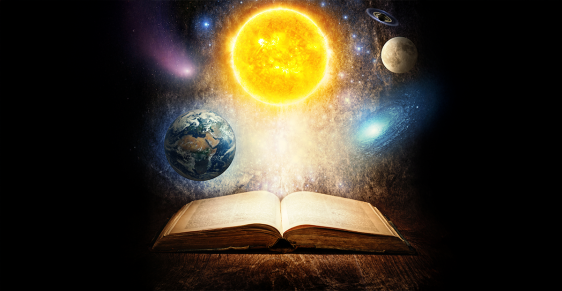
Astrobiologist Seven Rasmussen shares her top sci-fi reads, blending scientific accuracy with imaginative storytelling.
Her first recommendation, To Be Taught If Fortunate by Becky Chambers, explores somaforming - adapting the body to the environment rather than vice versa. Chambers' protagonists wake up from cryosleep on new planets with altered bodies suited to their surroundings. The CRISPR-based technology depicted is plausible given the long regeneration times between planets.
Next up is Pernicious Echoes by Nnedi Okorafor, a gripping tale of lesbian necromancers in space. Set in a resurrected solar system with a necromantic sun, it blends hard science and queer fantasy in a unique way.
Hyperion by Dan Simmons is another favorite, featuring a cyberpunk retelling of the Canterbury Tales across seven pilgrims seeking a godlike entity. Simmons' world-building includes imaginative spaceships with scientifically accurate drives, making it stand out as a masterpiece of hard sci-fi.
Annihilation by Jeff Vandermeer is a surreal, non-Euclidian journey through an inexplicable, biologically bizarre landscape. Its uncanny biology and unsettling atmosphere make it a unique and unforgettable read.
Lastly, Rasmussen praises Children of Time by Adrian Tchaikovsky, a story of a nanovirus accidentally accelerating the evolution of a spider species on a new planet. While the science is debatable, Tchaikovsky's meticulous world-building and exploration of culture-building make it a must-read for sci-fi fans.
Written by urgent.news from Nautilus's reporting — not their text. Machine-written — may contain errors; check the original before relying on it.